

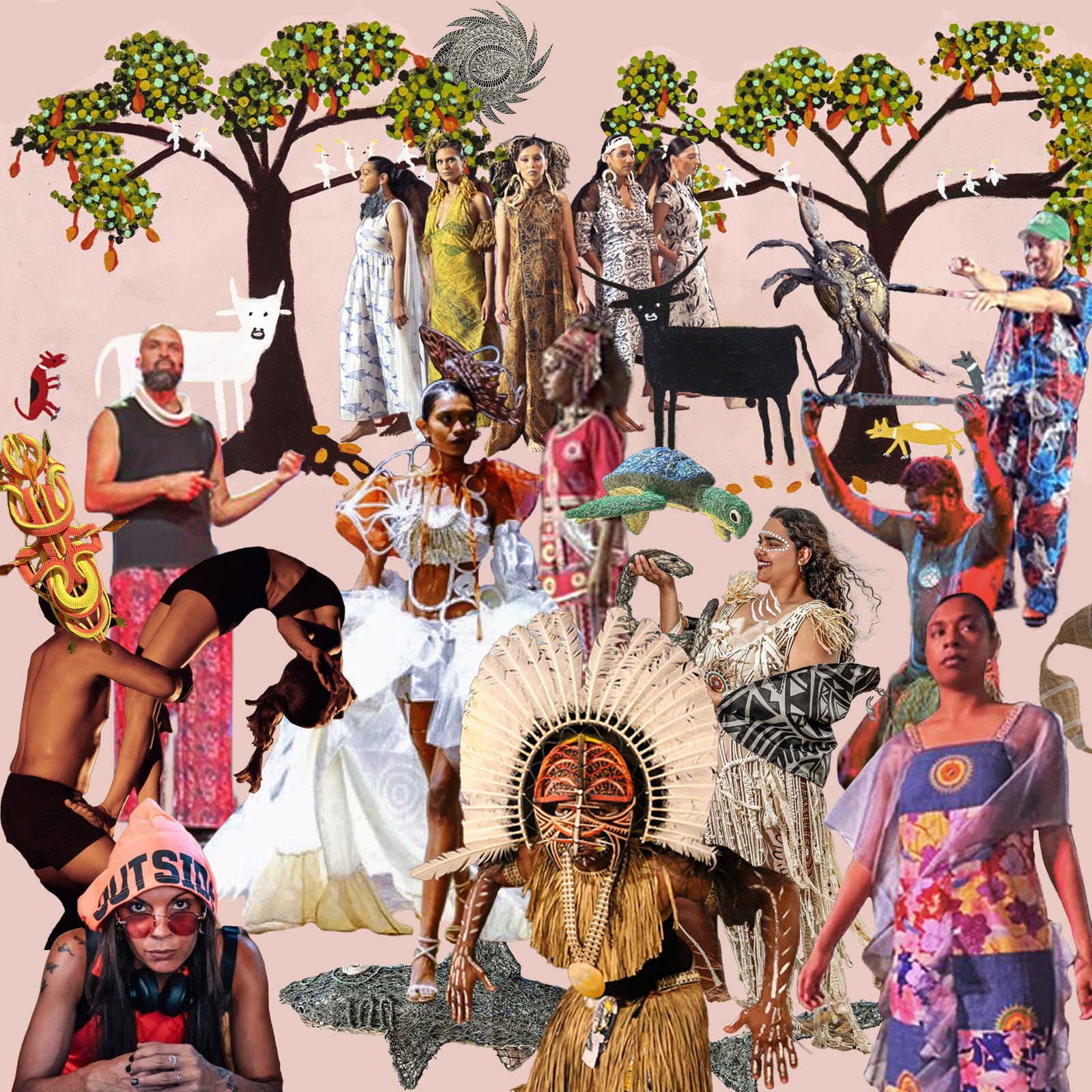
Last week I travelled to Far North Queensland as a guest of the Cairns Indigenous Art Fair (CIAF), an event that provides an opportunity to forget the bad news for while and write a more positive account of the state of the arts in this country.
In Cairns there seems to be a general recognition that art and culture play a vital role in the local economy. This has given rise to a broad range of arts activities spread across art centres and galleries in the city and surrounds. It’s no surprise that Indigenous art leads the way, but what’s most important is the spirit in which everything is undertaken. If Sydney seems chiefly concerned with projecting the image of an arts-friendly city, while creating an environment more congenial for late-night parties, drinking and gambling, in Cairns, cultural values have deep roots in the community.
It’s no exaggeration to say that CIAF is as much about culture as commerce. I’ve been to countless art fairs in different parts of the world but have never encountered one in which there was so little urgency about making sales. While selling was obviously a desirable outcome, it felt as if many exhibitors were happy enough to tell people about their work and their country, to swap stories and make new friends.
There was a palpable sense of unity among different groups from FNQ, especially the Torres Strait Islanders, whose work gives the event a special character. The atmosphere is quite unlike the Darwin Aboriginal Art Fair, coming up next month, which brings together exhibitors from all over Australia, from the southern states to the Central Desert, to the Tiwi Islands. Cairns is far more specialised, with only 33 exhibitors - the single commercial gallery being John Stafford’s Onespace, from Brisbane. The bulk of the show consisted of presentations by art centres and by 21 independent artists.
In addition, there were more than 130 First Nations businesses included in an Artisans Showcase housed in two long tents. For every painting or sculpture sold, there were dozens of items of jewellery, ceramics or clothing.
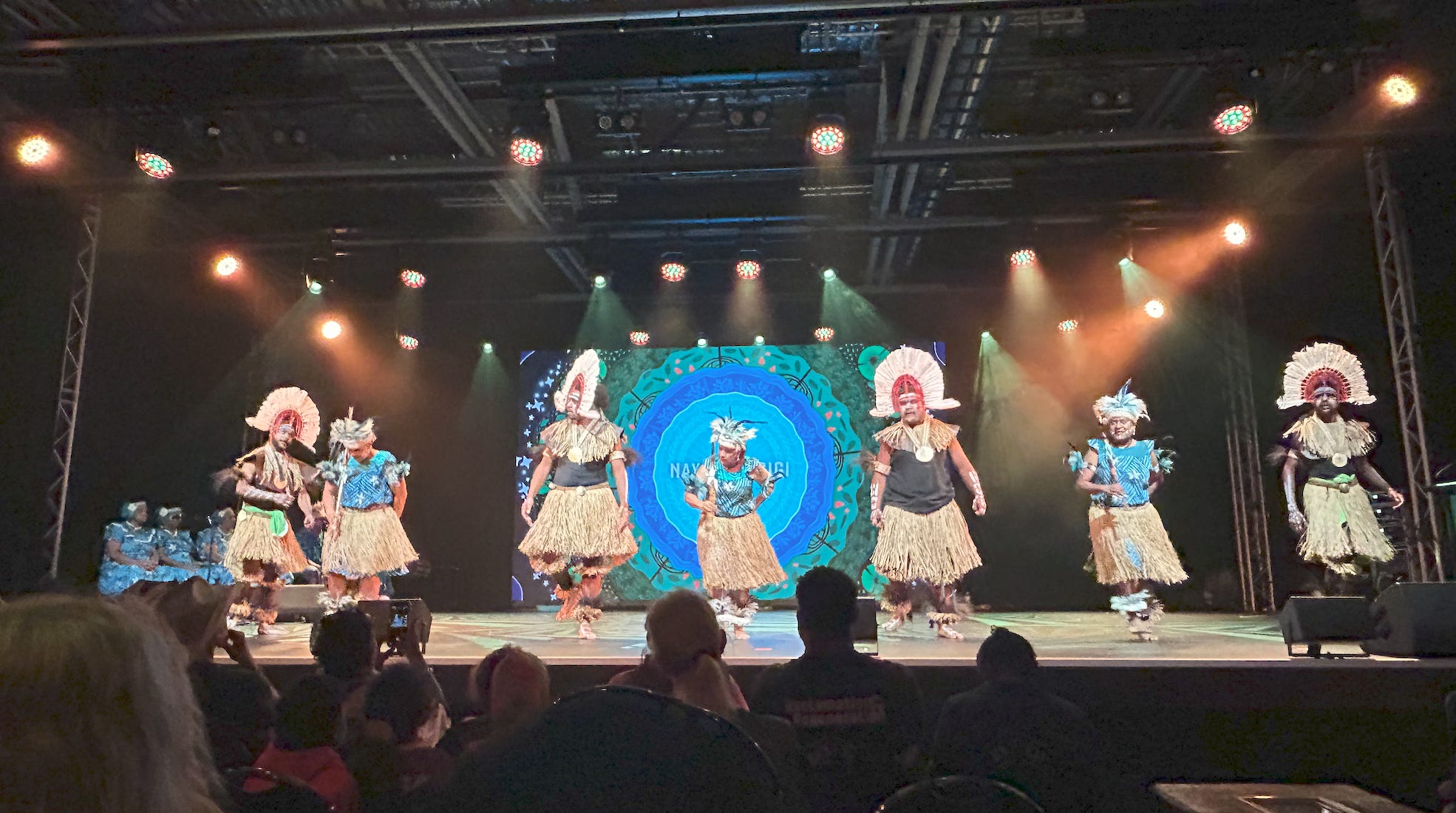
The venue for the Fair was the Tanks Arts Centre, a set of giant concrete oil tanks alongside the Botanic Gardens. These structures were transformed into exhibition and performance spaces in the 1990s – long before the Art Gallery of NSW tried the same trick with the basement of its new building. The Tanks are surrounded by rain forest, with pop-up shops and food stalls scattered around the grounds. Exhibitors were housed in Tanks 3 & 4, with Tank 5 devoted to talks, presentations, dance and musical performances, and even a play – The Boy Who Found His Way Home by Torres Strait Island writer, Jillian Boyd-Bowie.
This year’s theme was ‘Reclamation and Regeneration’. In the words of CIAF director, Teho Ropeyarn: “Reclamation is the active retrieval of what was taken, lost archived or forgotten; whilst Regeneration is the renewal and transformation of that knowledge into vibrant living cultures.”
If ‘reclamation’ allowed for a slightly militant interpretation, there was none of any of the aggressive posturing we’ve recently seen with Daniel Browning’s declarations that only ‘Blak’ people have the right to comment on First Nations art. A fair, by definition, is an open-door event that wants all visitors to feel they can enjoy the art on display and take some of it home. It reflects the relaxed atmosphere of Cairns itself, a cultural melting pot in which different ethnic groups rub shoulders with much greater ease than Sydney or Melbourne.
Since I last attended CIAF the event has attained a new level of professionalism. Teho Ropeyarn, has proven to be a popular and highly motivated leader, and there was a genuine warmth in the welcome extended to everyone. When I think of Ropeyarn as an artist, I remember his monumental print of four ancestor figures, My Birth Certificate, which featured in the Sydney Biennale and the Ramsay Prize in Adelaide, in 2022.
The VIP program, which sold out this year, was hosted by another artist, Tony Albert, whose skills as a communicator and ability to bring people together are quite exceptional. I could disagree with Tony on many things, but his input with CIAF was incredibly valuable, and appreciated by everybody. Hailing originally from Townsville, he qualifies as a local.
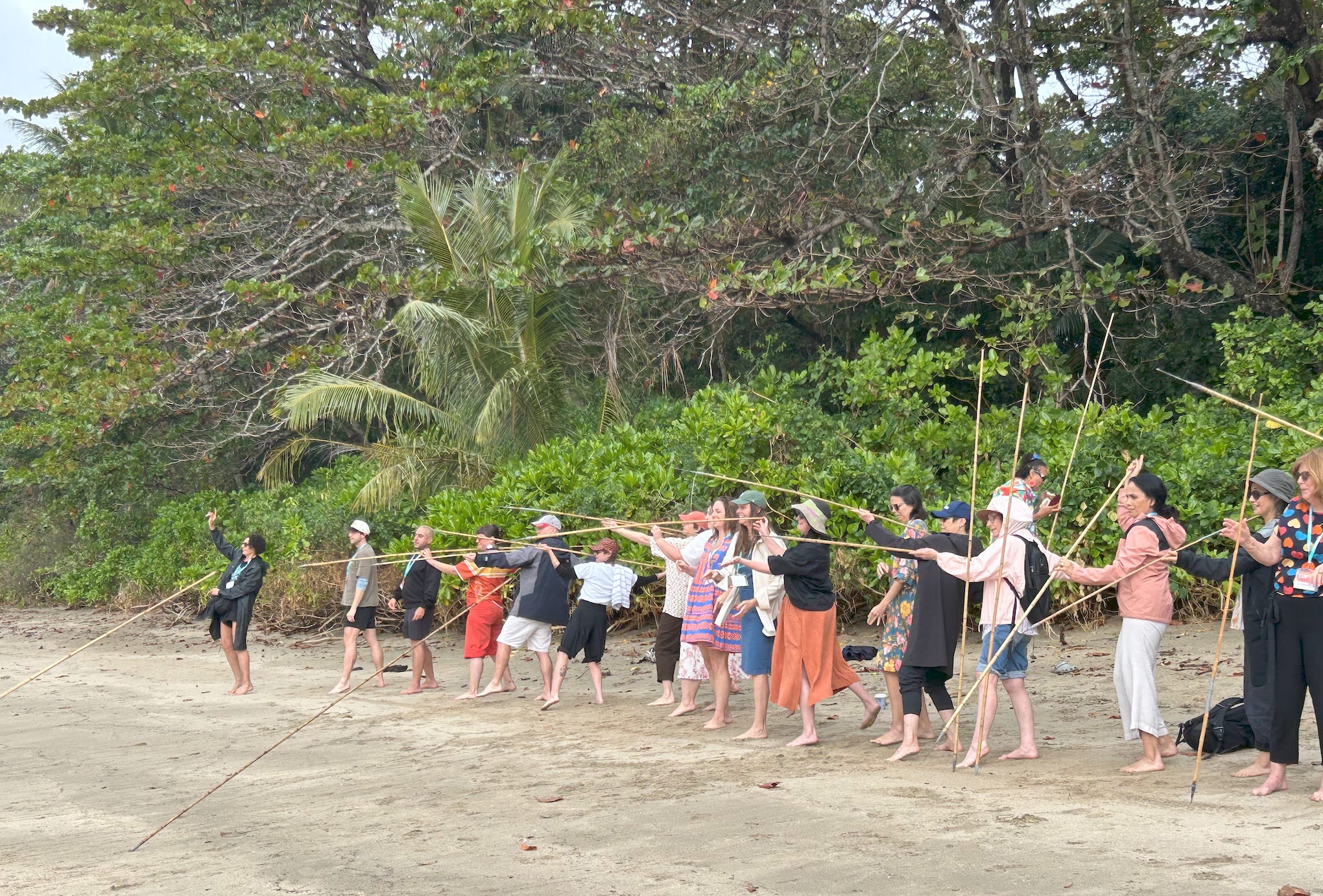
The program began with an excursion to Cooya Beach, an hour’s drive north, where a group of unlikely weekend warriors were taught how to throw spears and go mudcrabbing. When we had wandered a couple of kilometres along the mudflats a torrential storm rolled in and everyone got soaked to the skin. We dried out while feasting on crab.
At CIAF there was little trace of those familiar styles of desert art that are so prominent in Darwin. Most of the groups represented reside on the coast, or on islands, with the sea being the most conspicuous influence on local artists. The art of the Torres Strait is distinguished by its precise graphic style, as seen in the work of leading artists such as Alick Tipoti and Brian Robinson, both well represented at CIAF, although Tipoti was showing large-scale relief sculptures made from a brown resin that mimics wood.
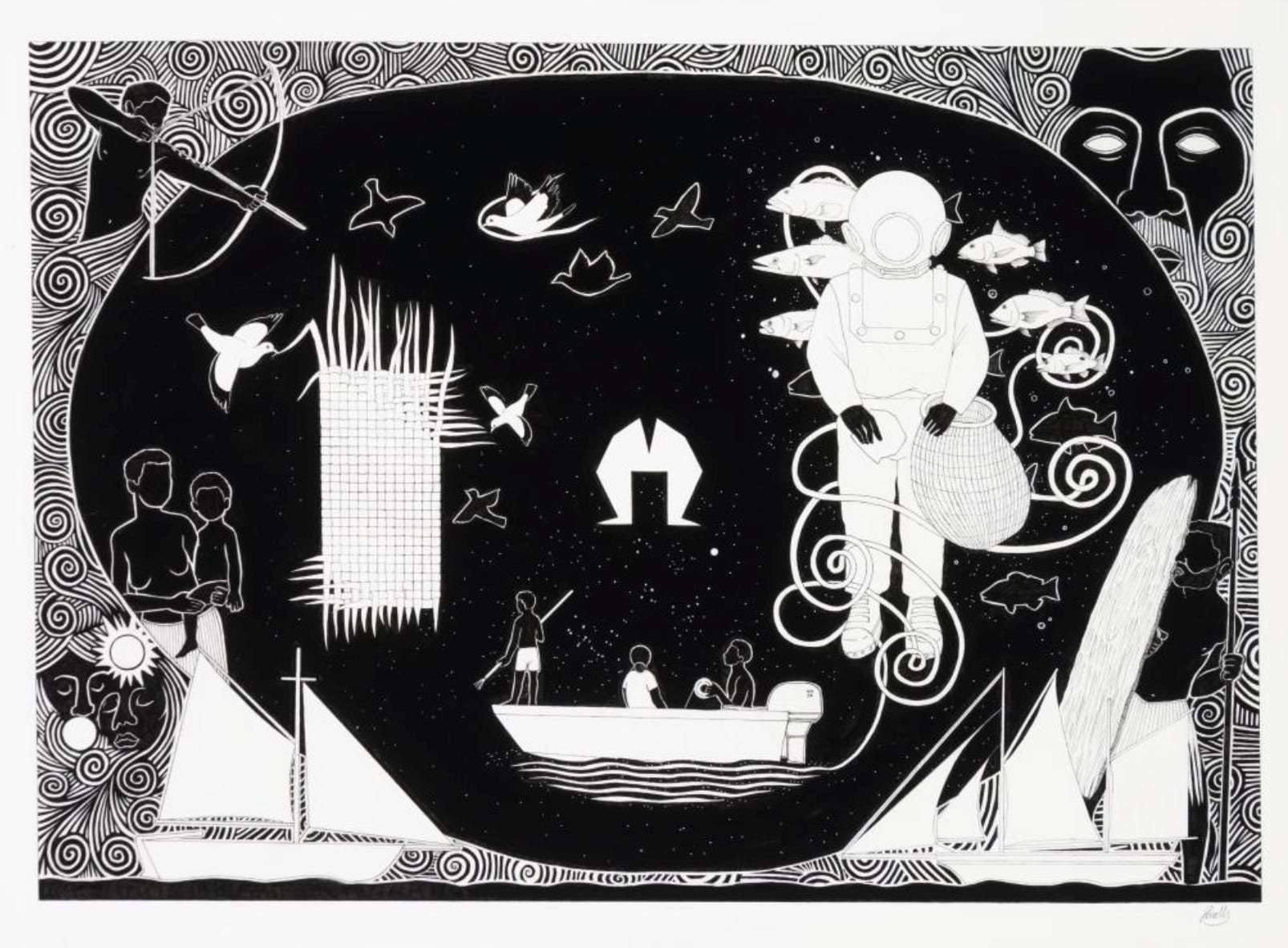
At the other end of the spectrum was Harriet Mills, only 20 years-old and still completing her studies at Cairns TAFE. Employing a black-and-white technique that owes a debt to her Torres Strait heritage, Harriet’s drawings combined local mythology with sly references to icons of modern art, including nods to Van Gogh and Klimt. One picture showed a ship at full sail, gliding along beneath a sky that echoes Vincent’s Starry Night. It was a brilliant debut for a young artist, who also won a Professional Development Award worth $10,000.
Another unique artform from the Torres Strait is the Dhari or Dhoeri (depending on whether you’re from the eastern or central islands) - the local headdresses worn in ceremonial dances. Artist, Tobias Corrie, who has ancestral ties to four different islands, devoted his entire booth to these pieces. A third speciality is sculpture made from the coloured driftnets that pose a notorious menace to local marine life and wash up on the shores of the islands. The Fair was packed with animals made from these nets, including sharks, fish, octopuses, turtles and lobsters. The most extravagant installation of driftwork pieces, by Jimmy K. Thaiday, secured a $10,000 Innovation Art Award.
The fair’s biggest prize, the $25,000 Premier’s Award for Excellence, went to Daisy Hamlot (b.1937) of Hope Vale, for a series of paintings of great charm and simplicity. At the other end of the spectrum were the brightly coloured woven wall hangings of Grace Lillian Lee, who has become a local legend due to her 2024 collaboration with French designer, Jean-Paul Gaultier. Last year, Lee became the first Australian Indigenous designer to show a collection at Paris Haute Couture Fashion Week.
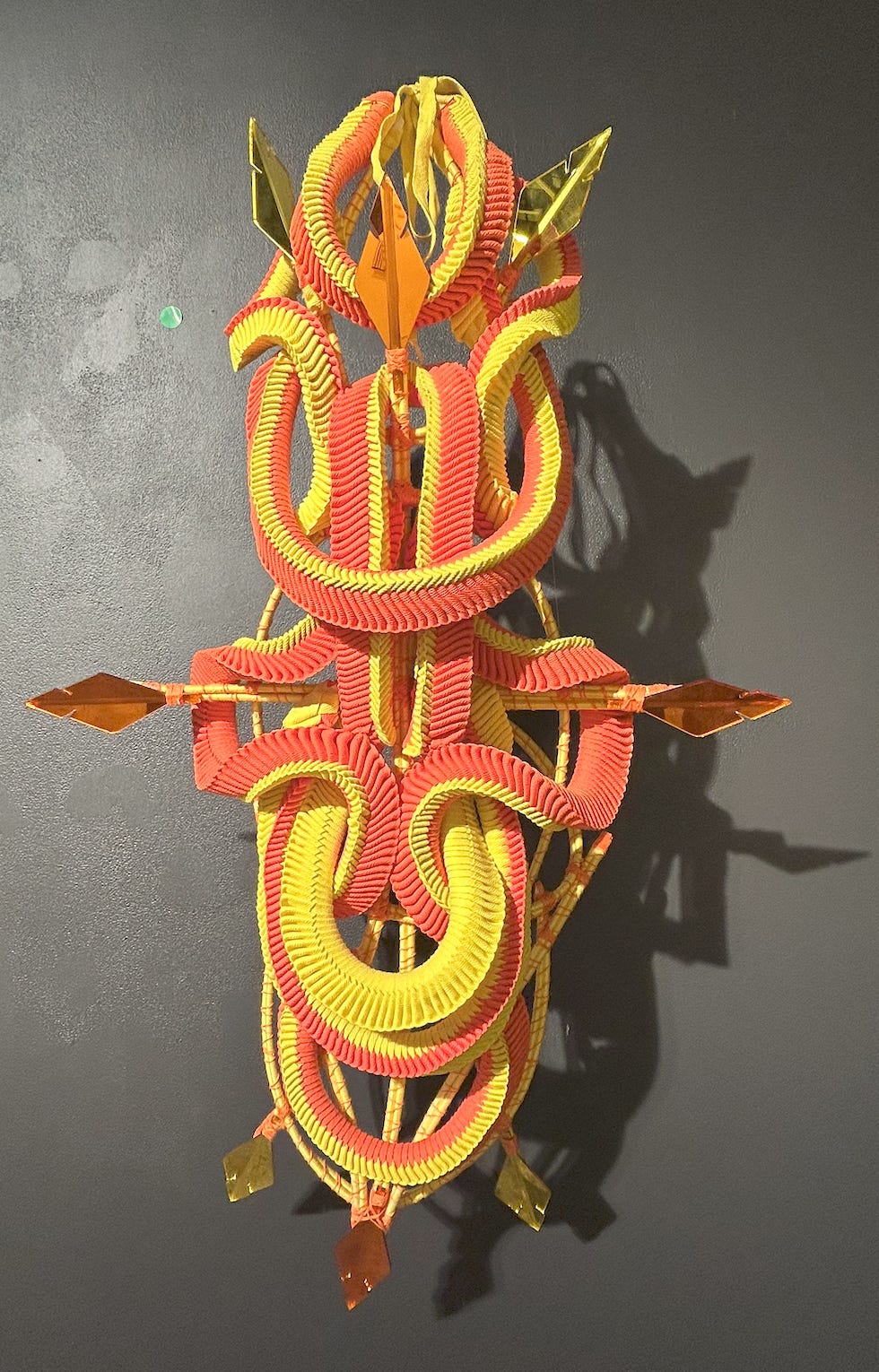
Among the art centres, it was hard to go past Aurukun, which featured work by wellknown artists such as Mavis Ngallametta, Keith Wikmunea, Janet Koongotema and Alair Pambegan. The relative isolation of the community, on the east coast of the Gulf of Carpentaria, seems to have allowed artists to develop distinctive, individual approaches.
CIAF has expanded since my last visit, but so has the Cairns Art Gallery, which was hosting five exhibitions spread across three different buildings. Along with a textile show, Woven Together, and a print survey, Spirits in the Ink, there were solo shows by Philomena Yeatman and Sam Harrison, and Brush, an impressive exhibition of eight local women painters.
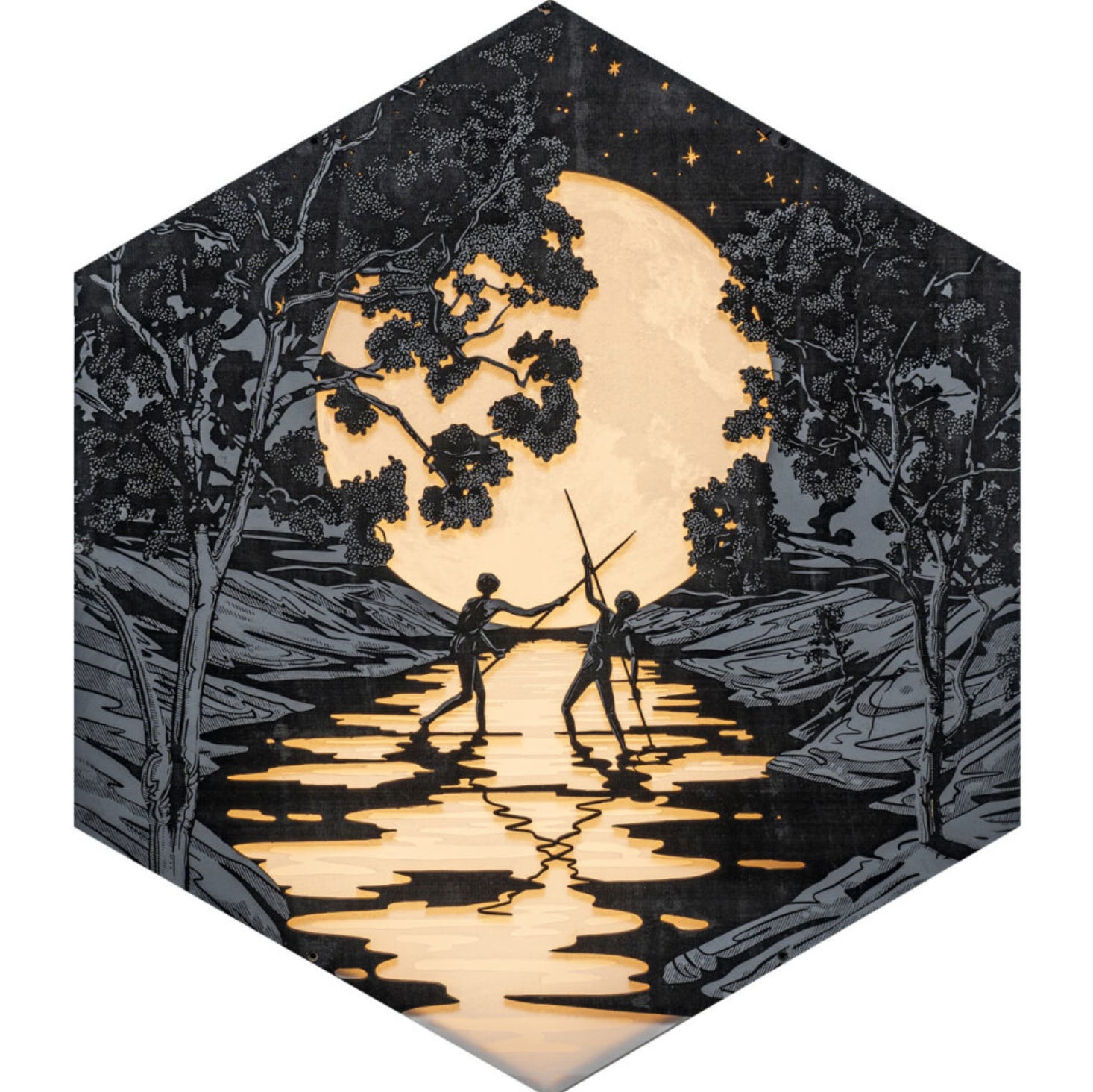
Sam Harrison is a young Brisbane-based artist whose work combines aspects of his Indigenous heritage with a conceptual preoccupation with time and cosmology. His Kin O’Centrism featured a series of interlocking light boxes with detailed laser-etched images that resembled linocuts. The installation was unashamedly theatrical, held in a darkened room, overshadowed by a flock of cut-out crows. Projected on the walls were images of the moon, stitched together digitally from NASA’s photo archive.
The show had an imposing cerebral dimension but could do no more than hint at Indigenous models of time in which past and future are telescoped into a kind of eternal present. Even western concepts of time cannot be so easily circumscribed, as shown by the age-old debates as to whether time is a cycle or an arrow. Harrison’s lightboxes might pass as superior forms of illustration, but the intellectual ambition of this show was extraordinary. Cosmology is a complex subject, but Aboriginal kinship may be just as forbidding.
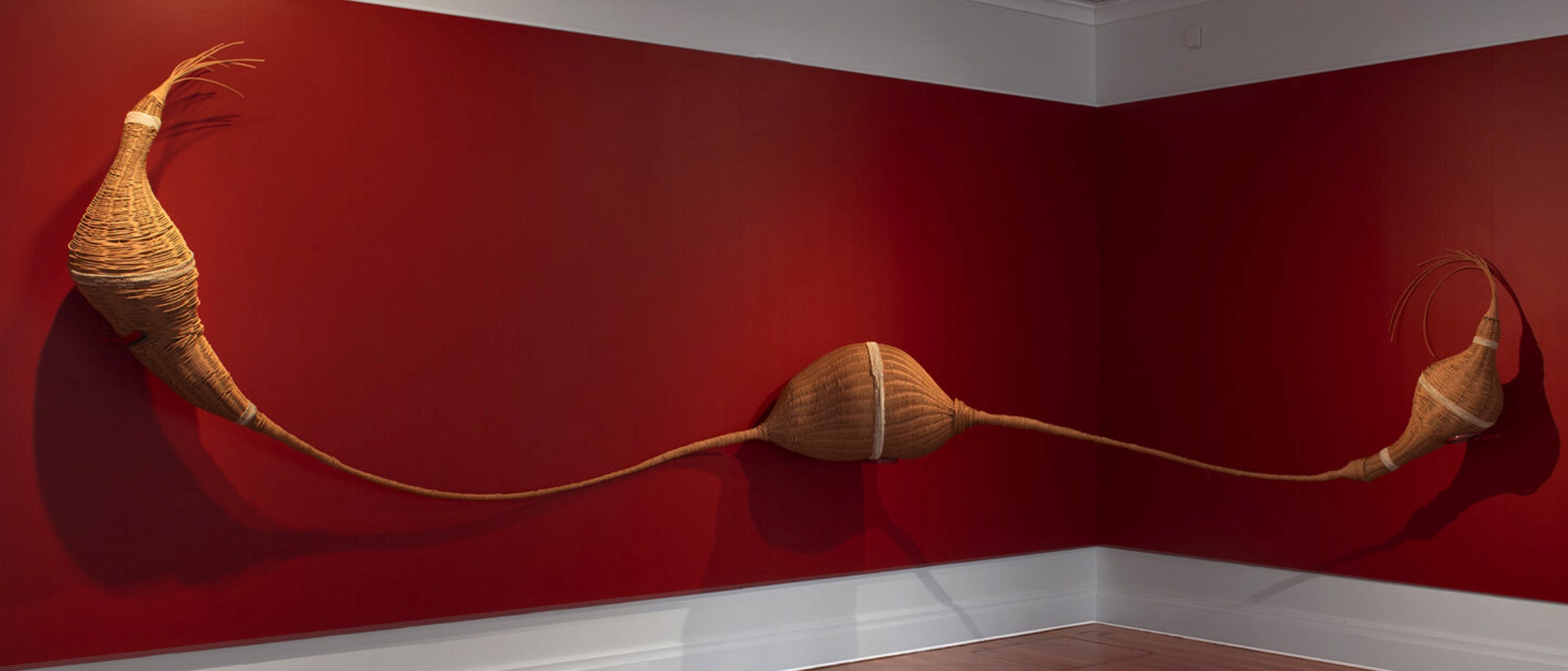
Harrison counts as a discovery, but the stand-out artist at the Cairns Art Gallery was Philomena Yeatman, from the Yarrabah community. Her show, Babim, Muudjum, Djanguul, consisted of a series of enormous sculptural weavings, the largest occupying an entire wall painted bright red. This work, which gives the show its title, is composed of three womb-like forms connected by slender umbilical cords. The translation from the Gunggandji language, is “Grandmother, Mother, Daughter”.
One can imagine these woven sculptures in any contemporary art museum on the planet. Made by a 66-year-old woman who has spent her life in a community 50 kms from Cairns, they connect with a universal language of art familiar from the work of artists such as Ruth Asawa and Bronwyn Oliver. Yeatman’s weaving skills make her a match for either of these celebrated predecessors.
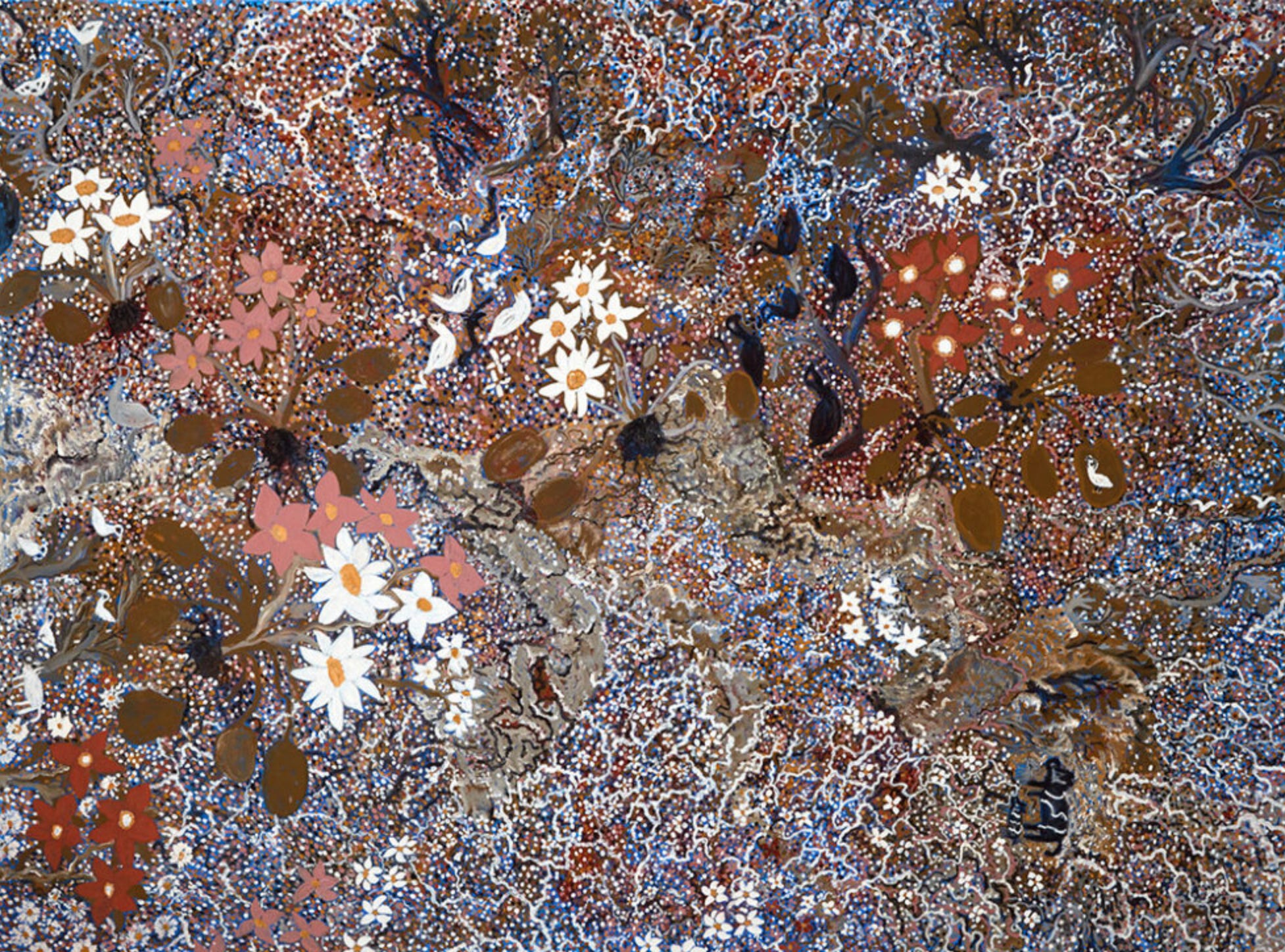
Brush, curated by Shonae Hobson, featured eight women artists - Sally Gabori, Naomi Hobson, Samantha Hobson, Janet Koongotema, Netta Loogatha, May Moodoonuthi, Rosella Namok and Mavis Ngallametta. Four of these artists are no longer with us, but the remainder are painting up a storm. Naomi Hobson is the curator’s mum, but it would have been an injustice to exclude her on that score. The power of the show lies in its incredible diversity, and the booming confidence that characterises so much of this work.
Elsewhere in Cairns, NorthSite Contemporary Art was the venue for a retrospective by Arone Raymond Meeks (1957-2021). The exhibition, Navigator Spirit Ark, has been a long time in the making, bringing together a body of work so large and varied it surprised even the artist’s closest friends. Favourite motifs would recur from one piece to the next, but Meeks was always ringing the changes across painting, printmaking and sculpture. No-one who attended the opening night could be left in any doubt as to how much he is missed.
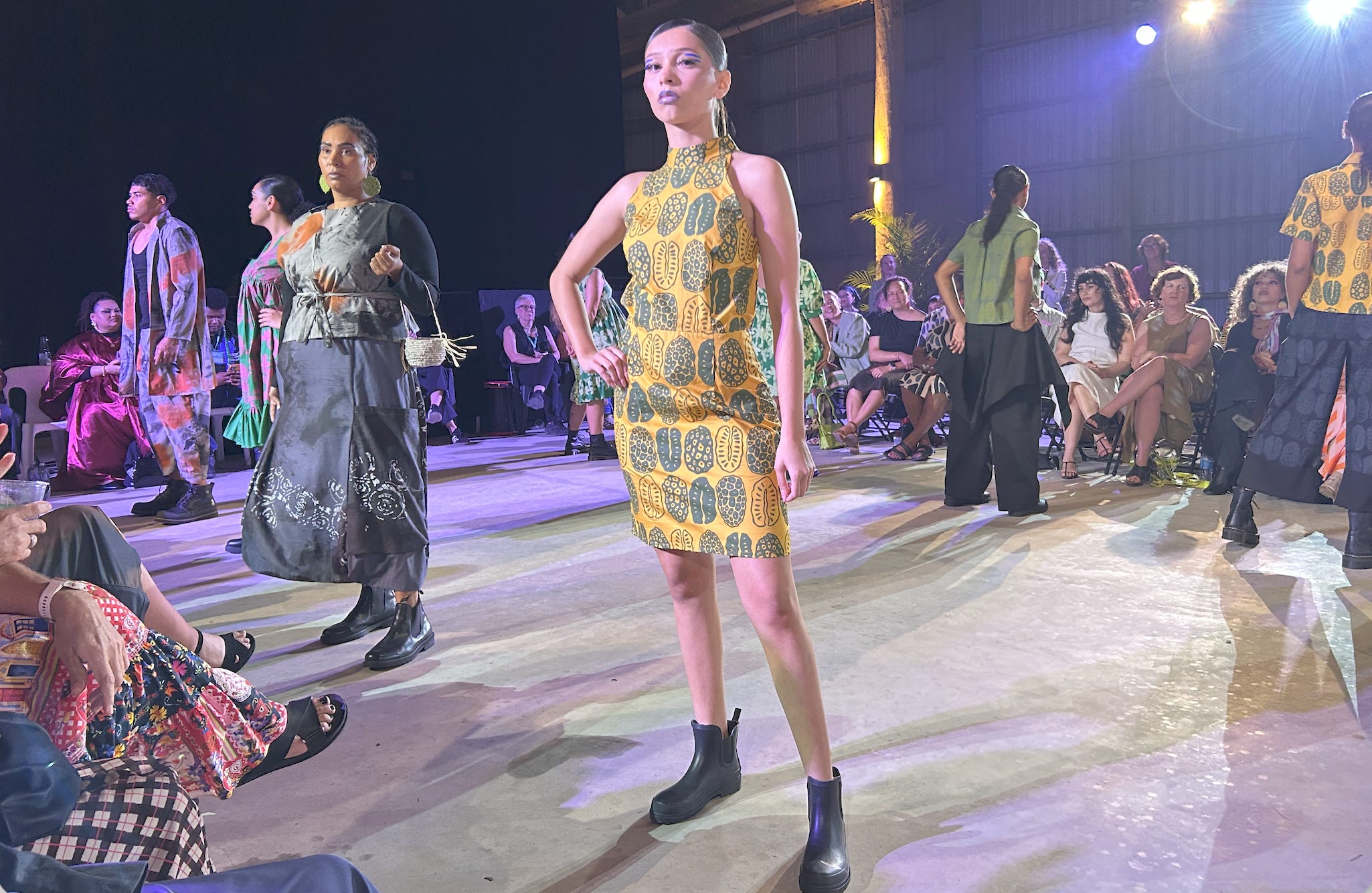
Some visitors felt that the high point of CIAF week may not have been the art, but the Fashion Performance Premiere held one night at the Mill – a former sawmill repurposed as an events centre. It was an exuberant evening that featured a group of young, Indigenous models wearing garments by 25 designers or collectives, including guests from Taiwan and New York, and many of the community groups exhibiting at the fair. The catwalk display built to a crescendo and ended with everyone dancing – models, designers, organisers and audience.
If this summary of last week in Cairns sounds a little like an advertisement, I’m not about to deny it. As I seem to spend much of my time nowadays sorting through the corruption and spin that have become such a feature of the arts closer to home, it was a pleasure to discover a Fair that takes its grass roots seriously, understanding that culture is something that grows from communities, not a dubious gift selected and bestowed by a government that declines to listen to its constituents. In Cairns, the most unrapacious of art fairs enjoys a direct connection with the public in a way that a succession of expensive, half-baked Powerhouse projects in Sydney will never match
The success of CIAF springs from a group of people who take a spontaneous pleasure in the art, fashion, craft, music and dance that are on offer, rightly seeing all these activities as complementary. It’s only natural that such things go together. It’s also an indictment of those feverish schemes concocted behind closed doors at the NSW Ministry of the Arts that would like us to believe 24-hour drinking and gambling represents cultural investment, while public galleries are to be starved of funds; and grants handed out to the right categories of applicant, rather than the best projects.
CIAF demonstrates that art and craft can profitably co-exist with fashion and dance, with no-one feeling left out. It also shows that popular events may be run on a much more economical scale and continue to build audiences from one year to the next. If Cairns makes the most of whatever is available, at a time when the Crisafulli government is cutting back its support for the arts, Sydney squanders money on spectacle rather than substance. We need to get away from the Potemkin building projects, the cynical pork-barrelling of the western suburbs, and the mindless over-emphasis on parties and festivals, and take a lesson from the Deep North – recognising that every dollar invested in the regions goes a lot farther and bestows more lasting benefits. It’s sad to compare the anger and disaffection of the Sydney arts scene to the general feeling of inclusion one finds in Cairns. The moral is that arts and culture should not be for one favoured demographic at a time, but for everyone.
The most recent art column looks at another regional event, Discovering the Impressionists: Paul Durand-Ruel, Art Dealer Among Artists, at the Geelong Art Gallery. This is probably the closest thing to a travelling ‘blockbuster’ to be seen outside of the capital cities in Australia. Although the show focuses on the second-generation Impressionists discovered and promoted by the legendary dealer, Durand-Ruel, it also includes eight paintings by Monet, plus works by Renoir, Pissarro, Vuillard and Berthe Morisot. Don’t be surprised if the lesser-known artists prove to be the greatest source of attraction.
The film being reviewed is The Invite, Olivia Wilde’s remake of a Spanish movie about a failed dinner party that has already been remade in five other countries. If someone had given the script to one of Australia’s film funding bodies they would probably have turned it down flat, but there’s something about these middle-class, middle-aged characters that has struck a chord with audiences across the planet. It appears there are a lot of people out there for whom the mass market spectacle has less appeal than a story about four people in a room.
Cairns Indigenous Art Fair, 9-12 July 2026