

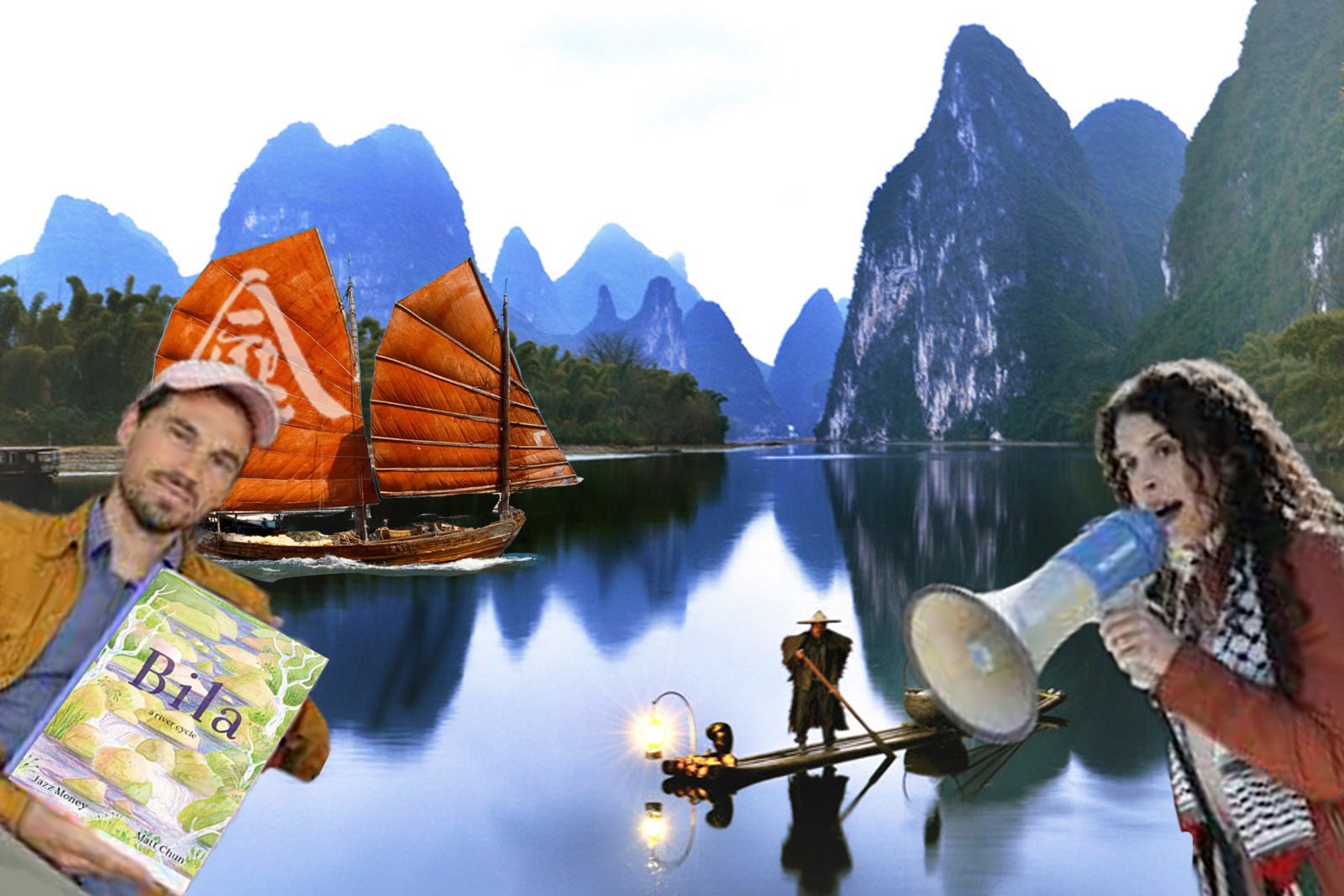
Over the past year I’ve been involved with an ambitious project, the Australia China Artist Residency Art Prize. It’s an initiative of the Chinese property group TWT, headquartered on Sydney’s North Shore. In typically Chinese fashion, the idea was put into action almost immediately, despite concerns that we would leave ourselves inadequate time - hardly more than three months - to gather a strong field from Australia and China. As it happened, everything moved with remarkable speed. We received almost 300 submissions, which were whittled down to 61 finalists, two-thirds from Australia, one-third from China. What was most exciting was the exceptional quality of the work, which made it difficult to choose a final exhibition.
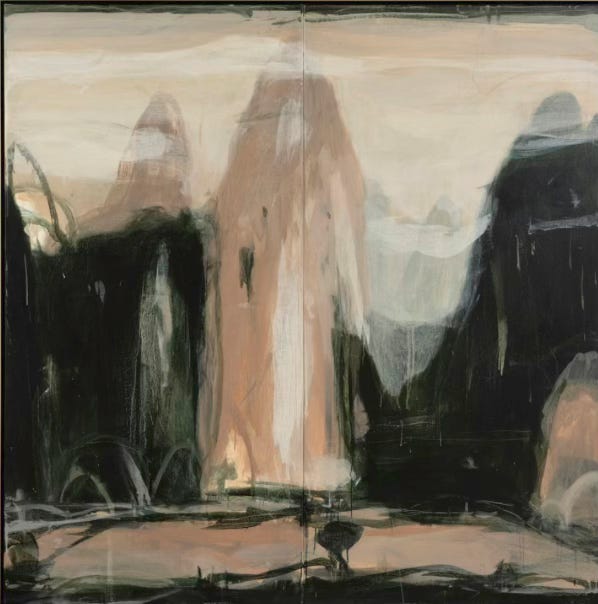
We gave first prize of $100,000 to Peter Godwin for his painting, Li River (Pale Peak and Mist), which sprang from a visit to Guilin province, where the artist confronted a fairytale landscape depicted by generations of Chinese artists. Godwin had to find a way to paint this scene that didn’t simply mimic the brush-and-ink artists but paid homage to those traditions. The result is a landscape imbued with a Chinese spirit of place, quite unlike anything previously attempted.
Two further prizes of $5,000 each, contributed by real estate empress, Monika Tu and her company, Black Diamondz, were for Digital Art and for work by an artist under 30 years of age. The former went to Geng Xue, swiftly becoming recognised as one of today’s leading exponents of multi-media, with a three-channel video called Seven-Day Dream, that incorporates glass sculpture, AI and Celtic mythology. Don’t ask me to explain the details.
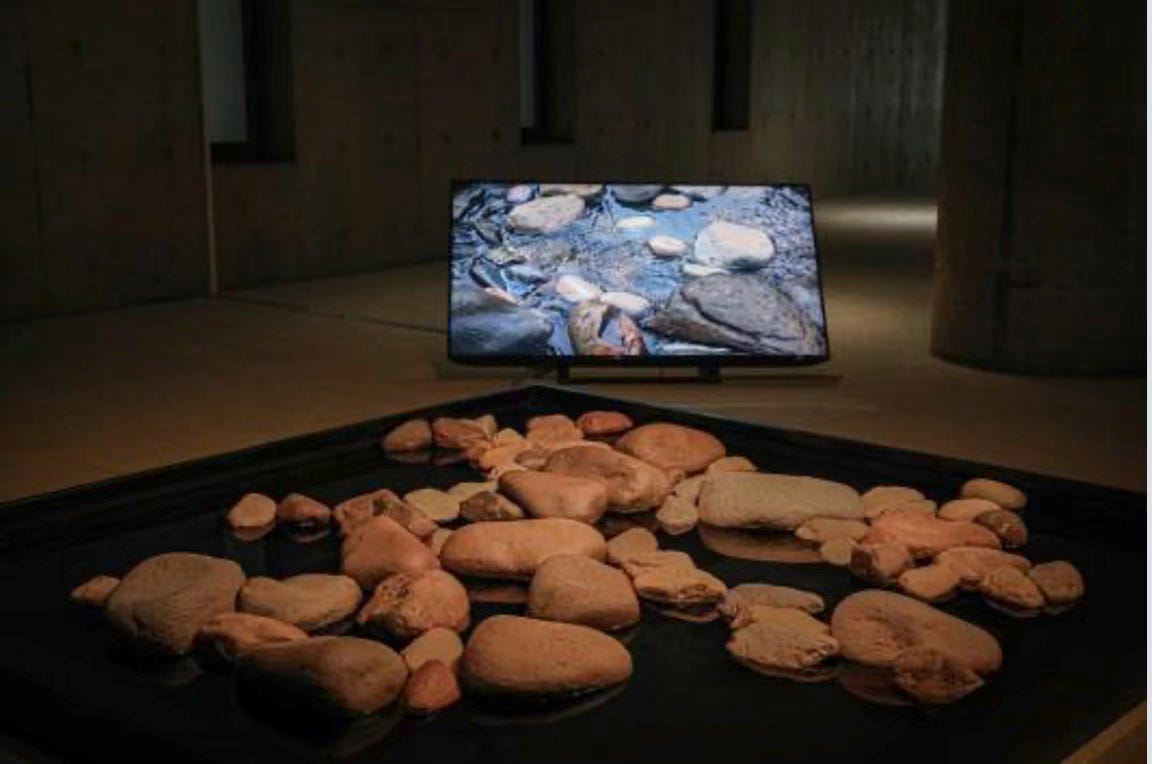
The winner of the Supernova prize for a young artist was Ziyuan Shi, for Echo, an outstanding installation piece that combined a video of a gorge in the Kimberley with a shallow tank of water in which hollow ceramic rocks coloured in the distinctive ochres of the region, circulated and bumped into each other, making a delicate chiming sound. Both idea and execution could hardly be bettered.
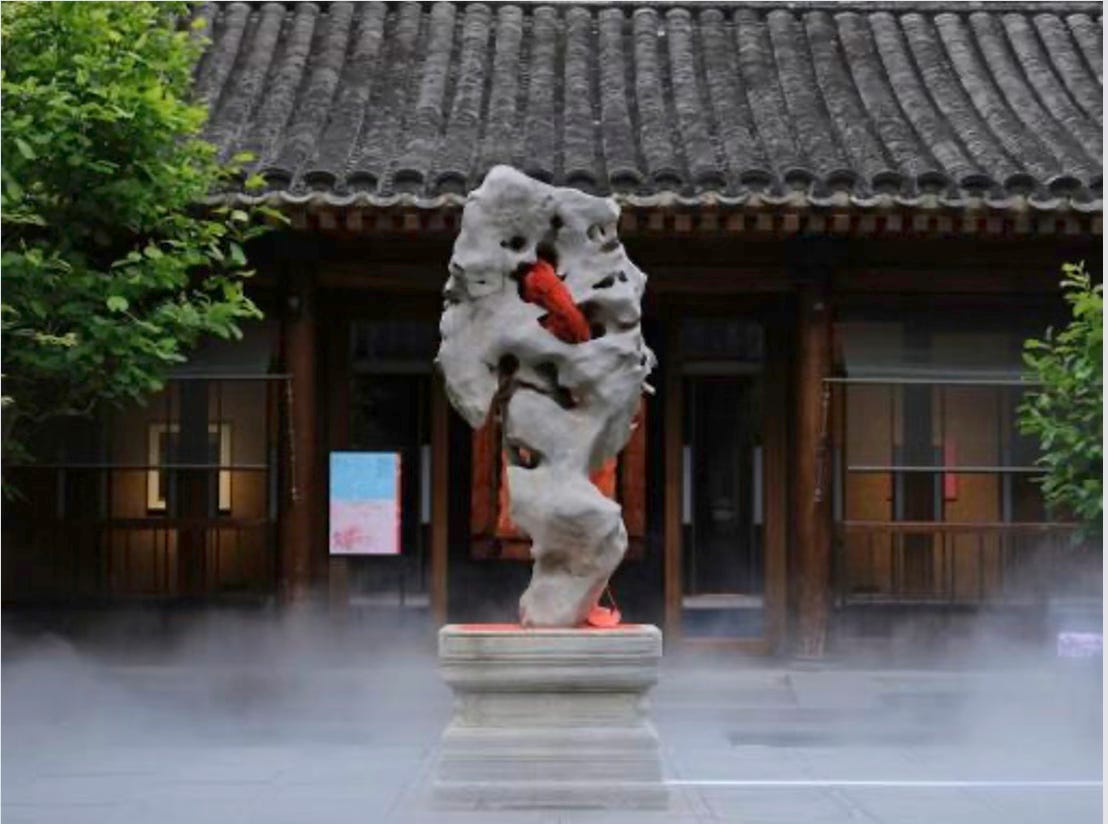
We gave a Highly Commended to another staggeringly well-conceived work, To install a heart in Taihu rock, by Xiaoxue Zhang; and Commendeds to a mind-boggling painting of a hay bale by Deirdre Bean, and a video landscape created with nano technology by Suxuan Jiang, that resembles a brush-and-ink painting in motion. This piece is also being shown at the 2026 Venice Biennale.
I won’t go into any greater detail, aside from noting that this first-ever iteration of one of this country’s richest art prizes, attracted a range of big-name artists from both Australia and China, including Indigenous artists, Naomi Hobson and Jenna Lee. The exhibition included paintings, sculptures, ceramics and installation, and a jaw-dropping selection of digital works. In brief, there was room for both tradition and innovation.
The competition was open to Australian and Chinese nationals, but the Chinese artists had the extra difficulty of getting work to Sydney in time for the show. Given this hurdle, the response was overwhelming.
The nominal theme was landscape, interpreted in the broadest possible manner, a subject chosen for its universal appeal but with one eye to avoiding the shallow yet strident political statements that have become so commonplace in contemporary exhibitions. The theme also encouraged artists to demonstrate their relationship with the culture of the other country. Peter Godwin did this superbly, as did Ziyuan Shi. In judging the prize, we took this cross-cultural exchange seriously, paying close attention to Australian artists who had visited China and vice versa.
Now here’s the punchline. Although we have tried mightily to attract media attention for this event, most outlets – with the exception of the Chinese language media – have not shown the slightest interest. I’m going to try and analyse this calculated snub.
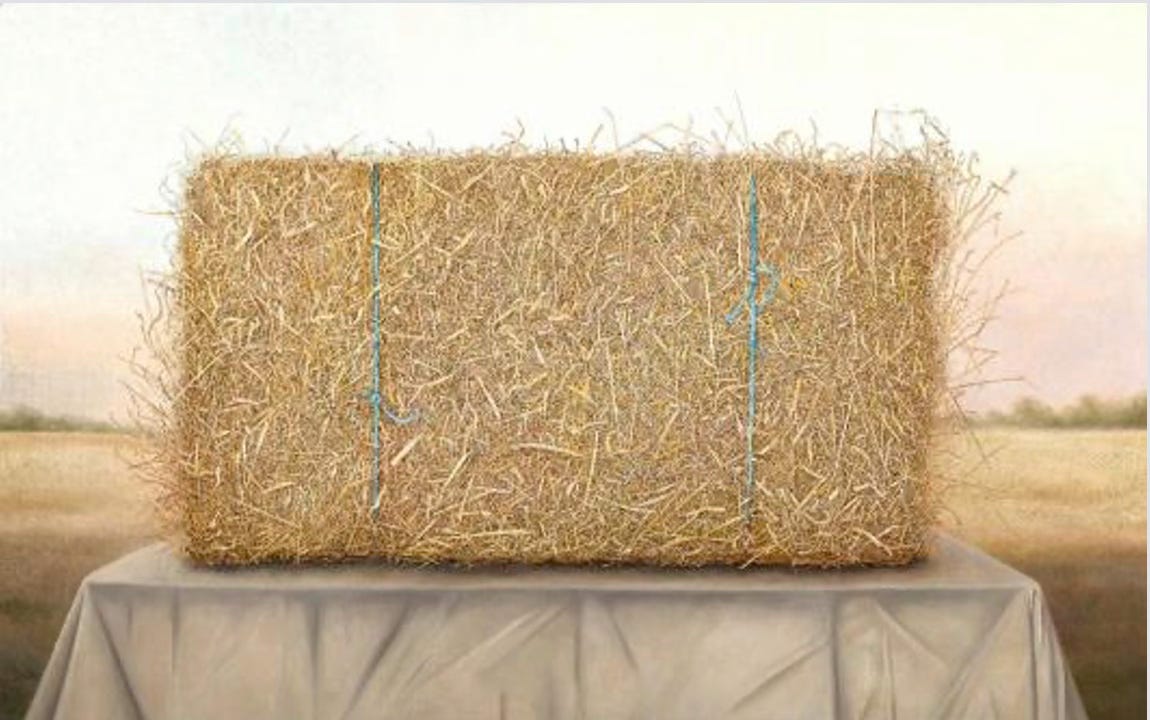
The chief motivations behind the ACAR Art Prize were to assert the ongoing strength of cultural ties between Australia and China, and to address a local decline in interest in work by Chinese artists who were all the rage a decade ago. While these artists (including a large group of emigres who have come to live in Australia), are still making high-quality work, the eye of art fashion has turned elsewhere.
Not long ago, Chinese artists featured prominently in the annual Archibald, Wynne and Sulman competitions at the Art Gallery of NSW. Indeed, it was widely believed to be only a matter of time until a Chinese artist such as Jiawei Shen or Fu Hong emerged as a winner. Instead, Chinese artists faded out of the picture as they ceased being selected. The big push nowadays is for Indigenous artists.
In an ideal world the trustees of the AGNSW would not play favourites or privilege one type of artist over another, but there’s no denying there’s been a shift in preferences. Within a week or so we’ll learn the make-up of this year’s Archibald season exhibitions and see if the Chinese fare any better.
While this has been going on, TWT has been supporting cultural connections between the two countries with a residency program that sends four Australian artists to China every year and brings four Chinese artists to Australia. The most recent Chinese artist to take advantage of this program was rising star, Cao Yu, along with her husband, sculptor Hu Qingyang, whose work has been collected by White Rabbit Gallery and the National Gallery of Victoria. Both artists have work in the ACAR Art Prize exhibition. Cao Yu’s startling video piece was created during her residency in Sydney.
Unlike their peers in the property world, TWT has also purchased contemporary Australian art on a regular basis and will use the Prize to add to its corporate collection.
If this sounds like an ad for a property group, it’s mainly an ad for the kind of activities many local – and larger - corporations could undertake had they the inclination. In promoting awareness of Chinese culture, the ACAR Art Prize is not that different from the annual Korean Australian Arts Foundation Art Prize, which raises awareness of Korean culture. I’ve been working with that prize for the past 12 years.
When it comes to supporting cultural activities, Australia has a lot to learn from South Korea and China, although there are marked differences between these Asian nations in terms of state vs. private sponsorship, and the kind of product each is prepared to export to the world. Successive Korean governments have sold K-culture to the entire planet, but the Chinese, while funding a lavish program for public artworks at home, have been conservative to the point of paranoia with their overseas ventures.
With China, we need to look to individual artists who show with leading art dealers around the world, while opportunities to exhibit at home have become progressively more constricted. A project such as the ACAR Art Prize can be welcomed by Chinese officials in Australia, even if they themselves would be unlikely to sponsor a transnational art exhibition or competition.
The entire event has been conducted in a spirit of good will, generosity and camaraderie, with complete transparency. So why has the media given it the cold shoulder?
I think the most likely reason is the reason for hosting the prize in the first place: a widespread antipathy for China that has found its way into the media landscape in recent years, like weedkiller being used on a thriving crop.
Xi Jinping’s authoritarianism may have done little to endear China to the rest of the world, but we can’t be contemptuous of the economic might of our biggest trading partner. At a time when Donald Trump seems to decide US foreign policy with a spin of the roulette wheel, we are in no position to sneer at the Chinese when they present themselves as a bastion of stability. We may diverge from the Chinese government on many issues, notably human rights, but the only way to proceed is through respectful disagreement.
The late, unlamented Morrison government tried to score political points at home by demonising China, and we paid a heavy price economically. Albo has acted in a more responsible manner, and the trade has come trickling back. It’s a simple equation: no matter how much we might disagree with the Chinese it’s far better to have them as friends and partners rather than enemies. Significant differences of opinion are better discussed in diplomatic circles rather than blazed across the front page of a tabloid.
The more subtle approach now favoured by the Australian government hasn’t prevented a large part of the media from voicing its criticisms and suspicions of Beijing – and we shouldn’t expect anything different. The free exchange of opinion is one of the qualities that distinguishes us, honourably, from China. I wonder, though, if that negative political sentiment hasn’t found its way into the cultural sphere, prompting arts organisations and arts journalists to avoid Chinese topics.
My first trip to China was in 1989, a month before the Tiananmen Square uprising, and I’ve been back many times since. Like other repeat visitors, I’ve learned to take the rough with the smooth, to accept the constant swings between openness and repression. What’s undeniable is the resilience of the Chinese people, the rapid progress in infrastructure and social services, and the inexorable growth of prosperity. The arts have played a role, but it’s been a bumpy ride. The years when Chinese contemporary art was at the forefront of every international exhibition are over, but as revealed by regular shows at the White Rabbit Gallery, there’s still a lot of excellent work being made.
While the mainstream media apparently finds nothing worth covering in a new art prize that unites Australian and Chinese artists in what is essentially a gesture of friendship, there was no delay in reporting how the University of Queensland Press had dumped a forthcoming children’s book illustrated by Matt Chun (AKA. Matthew Jones), an artist who has become better known for antisemitic hate speech than for his artwork.
If one looks dispassionately at the things Chun has posted on social media, which I won’t repeat here, or his rabble-rousing attempts to demonise the Jewish philanthropists of Melbourne, it’s hard to see how any reputable publisher could view him as someone they’d wish to support. He’s not exactly a role model for children. Nevertheless, Chun’s sacking has triggered the same chorus of outrage that flared up when Adelaide Writers’ Week dis-invited Randa Abdel-Fattah. Once again, we’ve read about a shocking assault on free speech which prompted a group of concerned writers to sever ties with the publisher. One of them was Randa Abdel-Fattah herself.
As UQP published Abdel-Fattah’s novel, Discipline, and stood behind her during the Adelaide debacle, it’s hard to believe they’ve become rabid enemies of free speech overnight. The point all these disgruntled writers and serial self-cancellers seem to overlook is that the ‘free speech’ they champion is never really free. When you exercise your democratic right to say hateful things about other people, with every possibility of stirring up prejudice and violence, the subjects of your speech are paying a price. The risk you take by going to extremes is that the tables may be turned, and suddenly it’s you that gets handed the bill – which is exactly what has happened in Matt Chun’s case.
When your ‘free speech’ offends against basic standards of human decency, it’s even more obscene to play the victim or the martyr – or to let your friends put you on a pedestal. There are many, many people horrified by Netanyahu’s actions in Gaza and Lebanon, myself included, who don’t feel the need to vilify fellow Australians born into the Jewish faith. There was no necessity for Chun to spew ugly rhetoric, and every reason to expect there would be consequences. It’s no more noble to be a Jew hater than to be a Muslim hater. It’s all frankly disgusting.
Despite the predictable hullaballoo, as Chun’s buddies rally around and cry foul, there are plenty of people – both Jew and Gentile – who will welcome UQP’s firm action. Although the publisher is wearing a sad face, it must be a relief to get rid of so many would-be firebrands in one blow. UQP will not close-up shop, like Writers Week, but it will be more cautious with its choice of talent.
“I cannot bear to publish my next book, which I am currently writing,” said Abdel-Fattah, “with a publisher that has empowered bullies.”
The last book was Discipline, perhaps the next one should be titled Self-Awareness.
Bullies, racists, perpetrators of cultural violence, political stooges of the right-wing press… UQP has certainly gone downhill fast! It’s amazing how rapidly friends can be turned into mortal enemies. In the fantasy world in which Matt Chun and his friends live, they are free to offend whoever they like, but oh, quelle horreur! when a publisher declines to endorse their actions.
I don’t know about you, gentle reader, but I’m so fatigued by these endless, sanctimonious charades of victimhood from aggressive bigots that I can’t help feeling the act is wearing very thin. There are only so many times one can be outraged over some alleged crime against freedom of speech. There are limits as to how often you can attack “Zionists” and pretend you’re not being antisemitic. There’s got to be an end to this historically threadbare equation between Palestine and Australia as “settler colonies”. The lead actors in this farce may be eager for repeat performances, but by this stage the audience is heading for the turnstiles.
I doubt that Australian literature would be much poorer if none of Matt Chun’s friends ever published again. It is, however, an irreparable loss that David Malouf died this week. A gentleman and a scholar, a writer of great precision, a poet of exceptional ability, David was arguably the greatest literary figure on UQP’s books. When I think of his quietly spoken and civilised demeanour compared to the loud-mouthed ideologues who have jumped ship, cursing as they go, it’s easy to see the difference between a writer who has made his mark for all time, and those most likely to disappear in a cloud of hot air.
Is this tedious, repetitive story, featuring the same cast of outraged writers worthy of more attention than the inaugural ACAR Art Prize? Obviously, I don’t think so, but unlike those big-hearted warriors of free speech, I’m probably biased.
It’s worth noting that the current exhibition at the White Rabbit Gallery is called The Hooligans, in reference to the Chinese term, Liumang, which was once used to refer to anyone who offended against the social order. One didn’t need to be a political activist or a criminal to be classed as a “hooligan”, it was enough to be gay, an outspoken feminist, a defender of heritage or community action. Apply the term to Australians with the same rigour and we’d all be hooligans.
In China there are very real dangers in opposing the social and moral tenets laid down by the government. One may be arrested and imprisoned on the smallest pretext with no chance of a fair trial, but these are extreme measures. It’s far more common for the state to exercise a little friendly persuasion, and most rebels quickly take the hint.
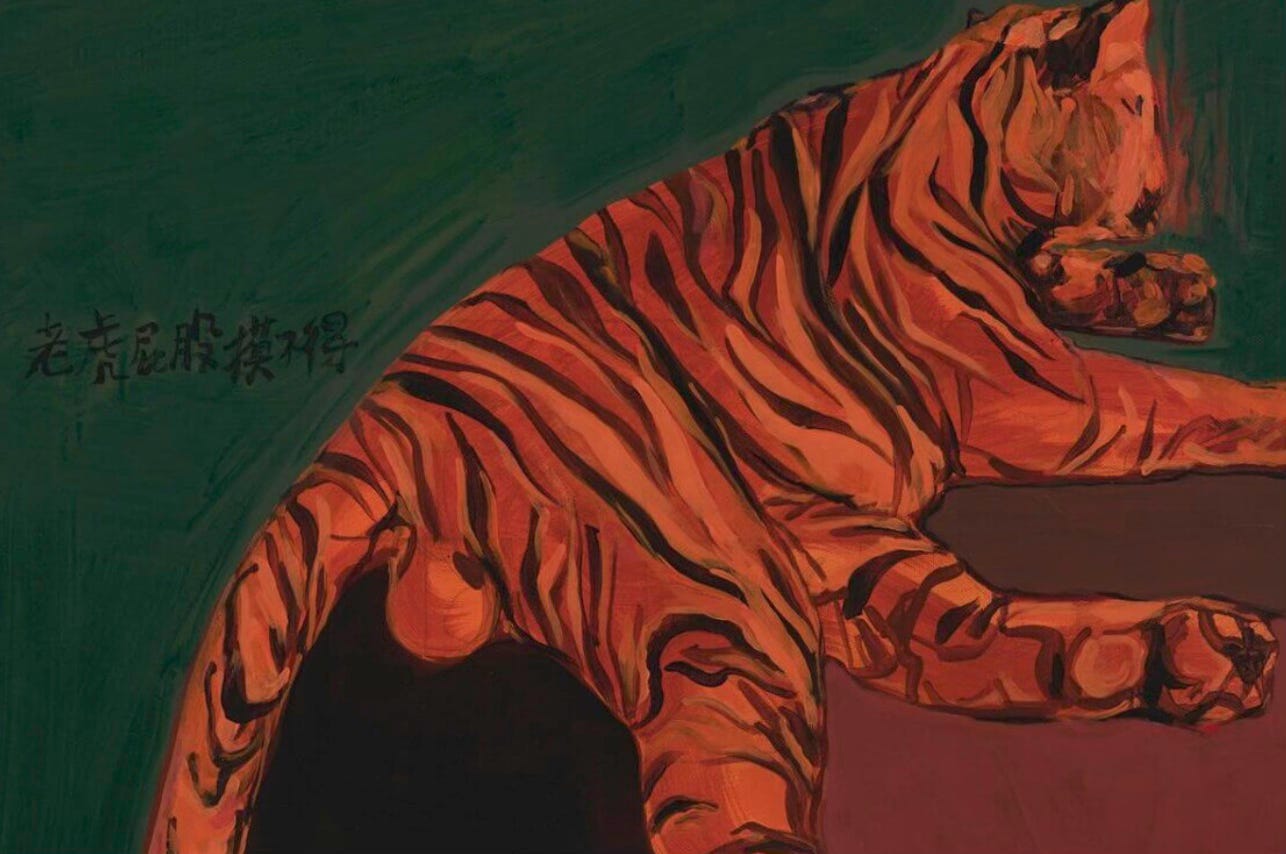
The White Rabbit show brings together works by 28 artists who have been prepared to take their chances and buck the system. Not all of them live in China, and many take an oblique approach, such Yu Ji, whose small painting at the entrance of the show depicts a red tiger lazing on the ground. The title is translated as The Tiger’s Butt Cannot be Touched (2023). Its near neighbour is a sculpture by Tian Longyu of a life-size elephant covered in tiger stripes, with a tiger’s face implanted on its backside. Both works are variations on the old adage about the dangers of catching a tiger by the tail.
A large painting by Meng Site, also represented in the ACAR Art Prize, called Future Land of Happiness (2023), is a surreal satire that transforms a street into a circus. The symbolism is insistent, but perfectly ambiguous.
There’s nothing mysterious about some of the work in the upstairs galleries, such as Chen Zhe’s The Bearable (2007-10), a photo series that documents the artist’s compulsive acts of self-harm, or Chen Lingyang’s Twelve Flower Months (1999-2000), being a dozen photos of the artist’s menstrual cycle accompanied by twelve different flowers. Chen frames her explicit images within hand-held mirrors and other devices of traditional Chinese culture, but it remains a highly provocative installation.
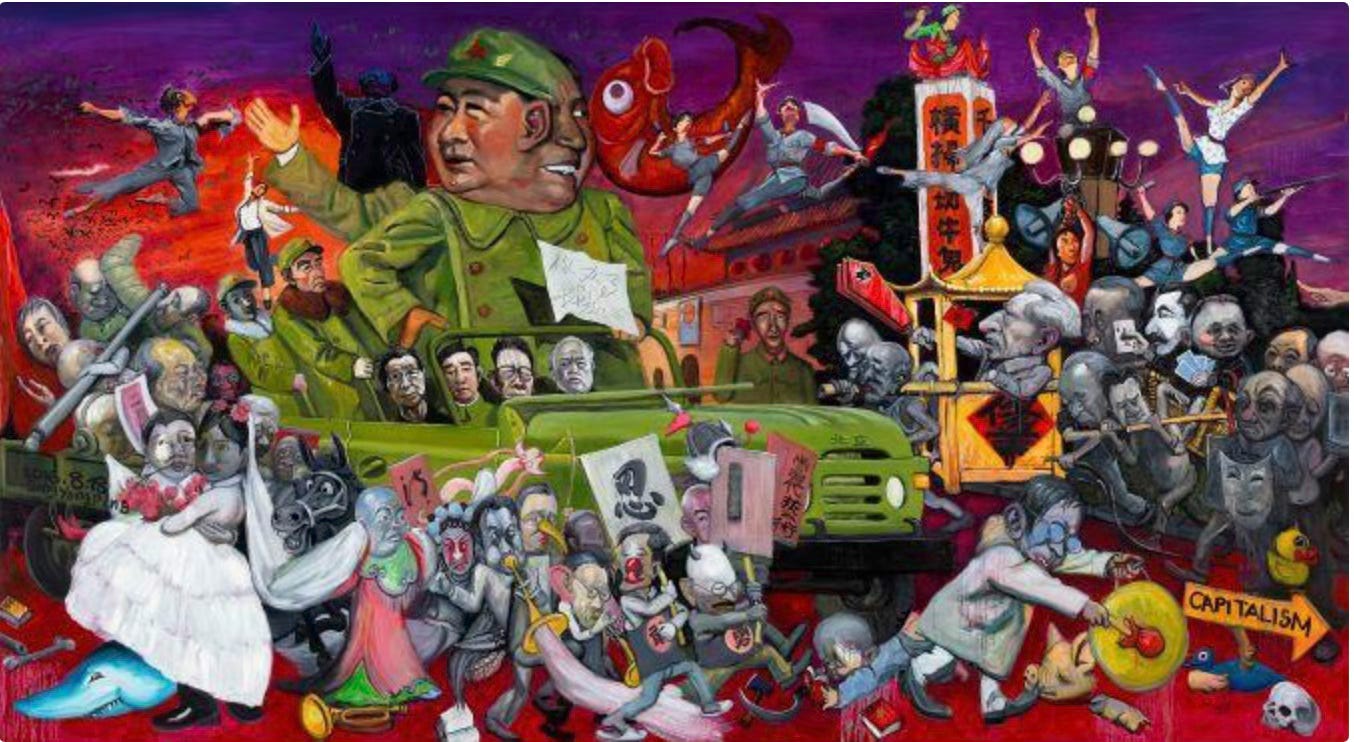
As is often the case at White Rabbit, the best is saved for last, with a top floor display of eight large paintings by Song Yongping, that chronicle recent decades of Chinese history in a riotous, no-holds-barred fashion reminiscent of Jörg Immendorff’s Café Deutschland series (c. 1980), which did a similar job on German history. Song’s paintings are loosely but vigorously painted, imbued with a savage energy. The last in the series, which shows deposed Premier, Zhao Ziyang, practicing his golf swing in Tiananmen Square surrounded by tanks, pandas and watermelons, was reputedly painted during a residency in Sydney.
For a Chinese artist to make paintings like these requires genuine courage, but that fierce, rebellious spirit is everywhere in The Hooligans. It shows us that no matter how restrictive or heavy-handed the state may be, artists will always find a way of expressing themselves, inserting a wedge of freedom into the crushing weight of conformity demanded by a paternalistic, surveillance culture that keeps a close watch on the public and private lives of its citizens.
Compare the bravery and intelligence of these Chinese artists with the political grandstanding of that noisy crowd of Australian writers complaining that their ‘freedom of speech’ has been threatened by a publisher refusing to work with a brazen antisemite. In China there are very real consequences for stepping out of line, and no way of knowing when you might have overstepped the ever-changing boundaries of official permissibility. Yet artists know it’s better to adapt, to be flexible and stay in the game rather than opt out and sulk.
In Australia, even the most vociferous extremists can do pretty much what they like, often with the financial support of government funding bodies and other philanthropic groups. When a publisher decides to pull the plug, a mass self-cancellation event ensues, like lemmings racing for the cliff. Yet it’s hard to believe the UQP walk-out will result in any financial hardship for the main actors. Given the willingness of our own paternalistic state to support partisan and politically inflammatory activities, these heroic types shouldn’t have to wait too long for their next cultural welfare cheque.
By way of something different, the current art column looks at the exhibition, Holding Ground at the S.H. Ervin Gallery, which features 17 artists working in various regions of NSW, responding to the encroachments of climate change. There is a political point of view being trumpeted in these works, but the most pressing concern has been to capture the beauty of a natural environment gradually being lost. The exhibition serves as a reminder that all the energy being directed into the politics of the Middle East, seems to have been siphoned away from environmental issues that have only become more urgent in recent years.
The film review looks at The Stranger, François Ozon’s faithful take on the novel by Albert Camus. It’s a stylish and sensual adaptation that introduces us to a man almost completely devoid of human feeling. Meursault is neither good nor evil, he’s simply a blank who enjoys life as it comes along, until he commits a murder. Today, this kind of ‘hollow man’ feels like an increasingly familiar social type – a receptacle for whatever attracts their attention, spurred to action without any need for knowledge or reflection. For Camus - a writer who understood what rebellion really meant - it was the role of art to analyse this phenomenon, not to promote it.
The ACAR Art Prize, ACAR Arts Centre, St. Leonards, until 18 June, acar.org.au
The Hooligans, White Rabbit Gallery, Sydney, until 17 June, whiterabbitcollection.org
A splendid article, always admired the way you speak in well-formed paragraphs (and probably think in finished articles).
What a great initiative! You are right about the lack of coverage - I had no idea about it. I did a painting of the Li River years ago called ‘China Syndrome’ and I’ve always wanted to visit that incredible landscape. And White Rabbit is fantastic - such a world class gallery 👏👏👏