

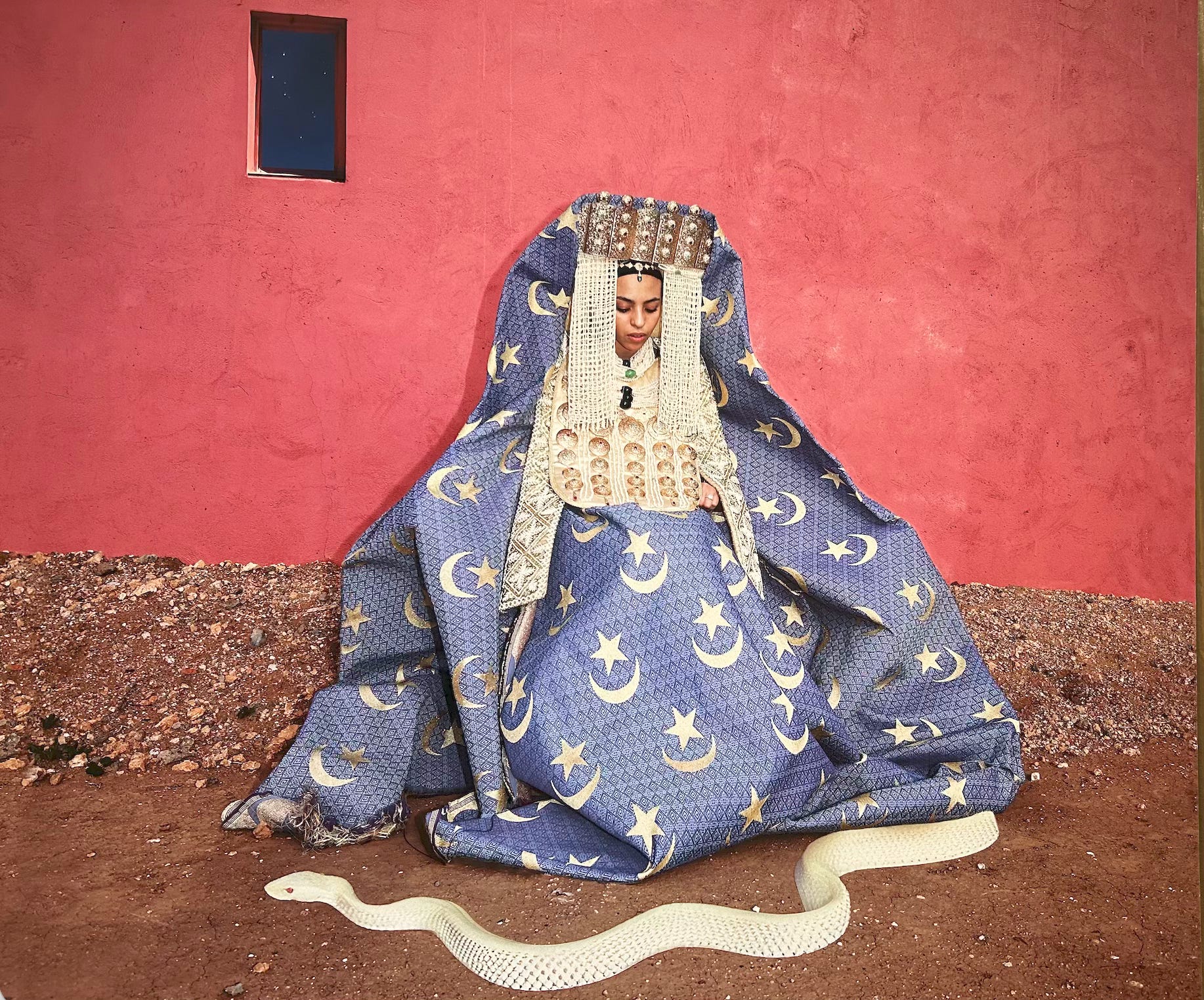
This piece was written for The Australian, but while it awaited space in the paper, the firm of Trump and Netanyahu decided it would be a great idea to bomb Iran. As a result, the story was put in the fridge, on the assumption that few people would be planning a trip to Saudi Arabia while hostilities persisted. As this poorly conceived war lingers on, the exhibition came and went. For the record, I’m posting the article here, without the paywall.
••••
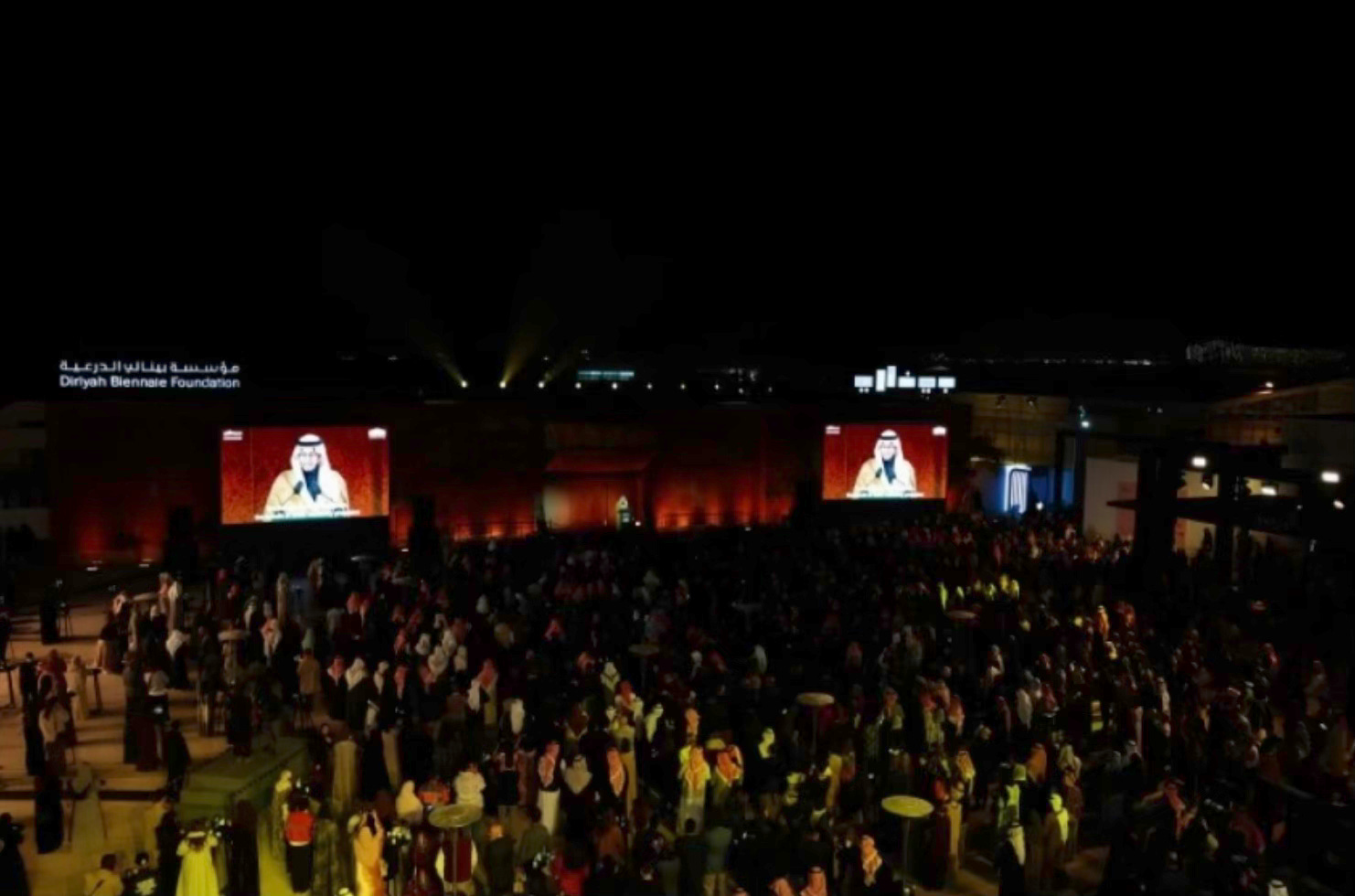
On a warm night in Diriyah, the ancient capital of Saudi Arabia, the walls and buildings are reverberating to the booming, machine-gun delivery of Palestinian rapper, Shabjdeed. The music is deafening, drowning out any attempt at conversation. A group of foreign journalists is fleeing for cover, but the courtyard is crowded with glamorous young women dancing, tossing their long hair from side to side.
It’s the opening of the Third Diriyah Contemporary Art Biennale, held in the JAX district of Riyadh. Ten years ago, such a scene would have been unthinkable, unspeakable. From the 18th century, Saudi Arabia has been ruled by Wahhabism – a strict, puritanical sect within Sunni Islam that rendered the Kingdom one of the most conservative places on earth. Not so long ago, visitors would have found Saudi women to be uniformly dressed in the black abaya – a long robe that covers the wearer completely, and the niqab, a veil that allows only the eyes to be seen. Dress codes were strictly enforced by the religious police.
Everything began to change in 2018 when Crown Prince, Mohammed Bin Salman (MBS) told US Sixty Minutes that clothing should be decent and respectful, but otherwise the choice would be “entirely left to women”. He followed up by disbanding the religious police in 2019, although this didn’t send Saudi women rushing to adopt the latest western styles. Today, one sees a mixture of looks, from the traditional black abaya and niqab, to different forms of headscarf, (the hijab), to the same kinds of skirts, pants and jackets one might find anywhere in the world.
Most of the young women dancing to the rap music were bare-headed, wearing long, robe-like dresses that looked stylish and expensive. Black is still the colour of choice but it’s not obligatory.
The Biennale is part of MBS’s Vision 2030 initiative, which aims to reduce Saudi Arabia’s dependence on oil revenue, diversify the economy, and make the country a venue for high level sporting and cultural events. The plan is to hold a biennale for contemporary art every second year in Riyadh, and an Islamic art biennale on alternate years in Jedda. With each new exhibition, the Saudis have grown more confident. Last year’s Second Islamic Biennale was an impressive, original exhibition, combining contemporary art with religious and historical artefacts, some of them more than a thousand years old.
The two previous Diriyah Contemporary Art Biennales were under the direction of western curators. The current one is the first to be headed by two Artistic Directors from the Arab world, Nora Razian and Sabi Ahmed. In a region in which contemporary galleries are largely funded by private money, both directors work for private art foundations. Razian is Head of Exhibitions at Art Jameel, Dubai and Jedda; Ahmed is projects Advisor for the Ishara Art Foundation, Dubai. They were assisted by four international curators.
It’s been apparent for a long time that the Middle East has become a major source of money and energy in the contemporary art market. The Art Basel group has just launched a new art fair in Qatar, competing with Art Dubai, which is holding its 19th edition this month. Hoor Al Qasimi, the Artistic Director of this year’s Sydney Biennale, has hosted no fewer than 15 Sharjah Biennials. The big event of 2026 is set to be the opening of Frank Gehry’s long-awaited Guggenhem Abu Dhabi.
There are obstacles that stand in the way of this boom, the first being the political instability of the Middle East. The international art set are notably reluctant to visit places too close to a war zone, with the ongoing carnage in Gaza and more trouble in Iran acting as a discouragement. MBS is championed as a reformer by a grateful population, but many westerners cannot so easily forget the hardline policies of the past, or the 2018 assassination of journalist, Jamal Khashoggi. There’s also a practical problem in that most of the great works of art are already in museums, making it hard to put together outstanding permanent collections no matter how much cash is on the table.
Substantial loans from other world museums are one solution, but it’s contemporary art that offers a new way forward, with the Diriyah Biennale signifying Saudi Arabia’s aspirations to be the cultural leader of the region. Inevitably, this means embracing a field that prides itself on its critical approach to social, political and cultural issues.
In the Kingdom there are obvious constraints on the ‘freedom of speech’ which artists in Australia prize so highly. Any work which criticised the Royal Family or the government would be an unlikely starter. The Saudis have been reassessing their relationship with with Israeli in recent years, but there are no Israeli artists in the exhibition. Fortunately, although contemporary artists will always feel obliged to make political gestures, there are countless ways to do so in such an oblique manner no-one could possibly take offence.
This is implicit in the shows’s theme: In Interludes and Transitions. It suggests an indeterminate state, poised between past and future, tradition and progress, Europe and Africa, reflecting the balance MBS seeks to preserve in his Vision 2030.
The catalogue introduction is a small masterpiece of artspeak, packed with all the appropriate jargon and references, without a clear proposition in sight. It’s vaguely about “the movements, migrations, and transformations that have long connected the Arab region with the world.”
The show featured over 100 works by 68 artists from 37 countries, including Australia, represented by Yolgnu painter, Naminapu Maymuru-White; photographic artist, Alana Hunt; and Afghan emigré, Elyas Alavi. The selection was not what one has come to expect from these big international events, incorporating artists from the Philippines, Sudan, India, South America, South Africa, and all parts of the Arab world, with far less emphasis on Europe and the United States.
The Biennale was a rejection of the western hierarchies but also a continuation of the ‘decolonising’ approach that is changing the composition of these exhibitions. This year’s Biennale of Sydney has a similar mix of artists.
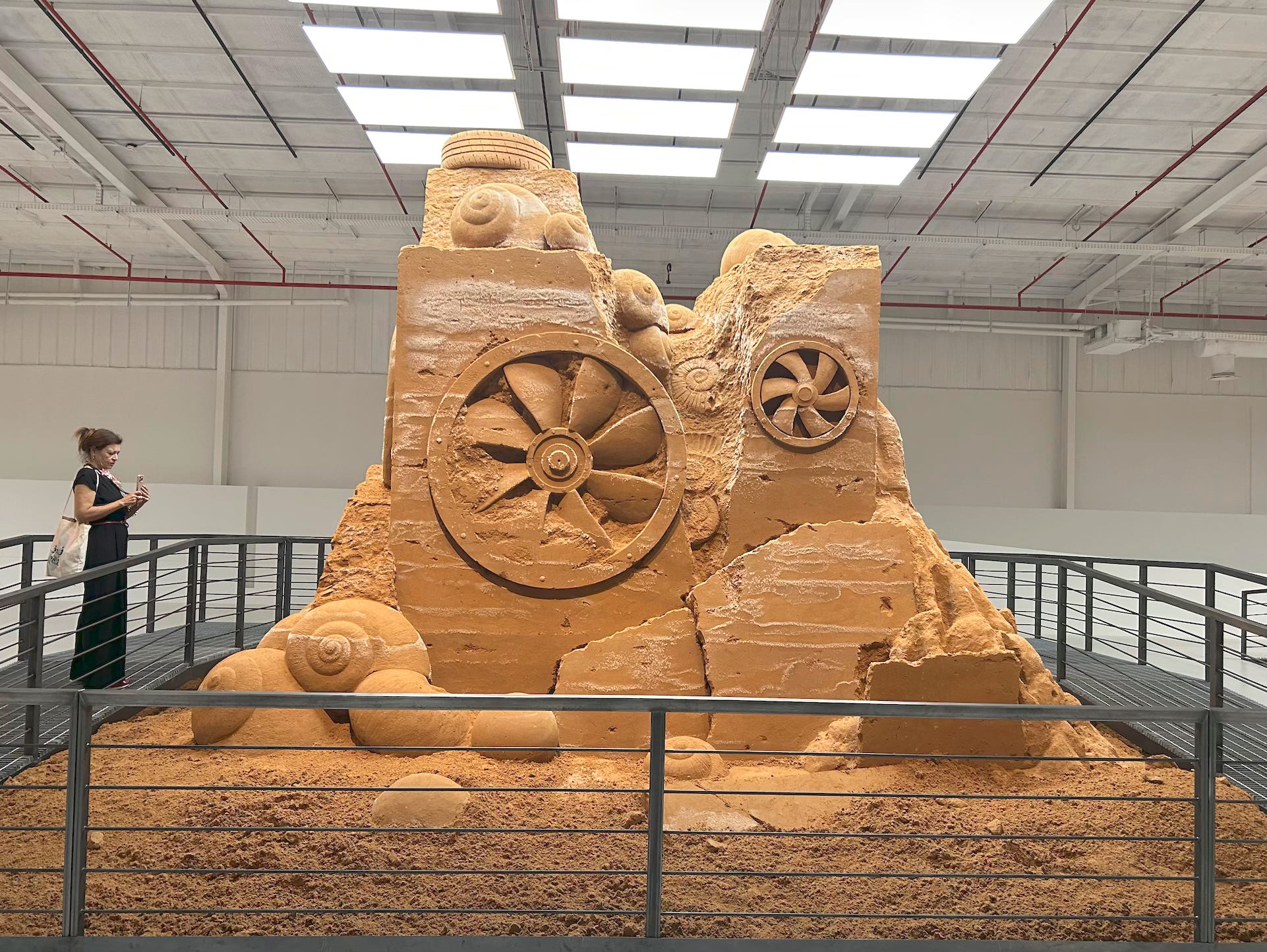
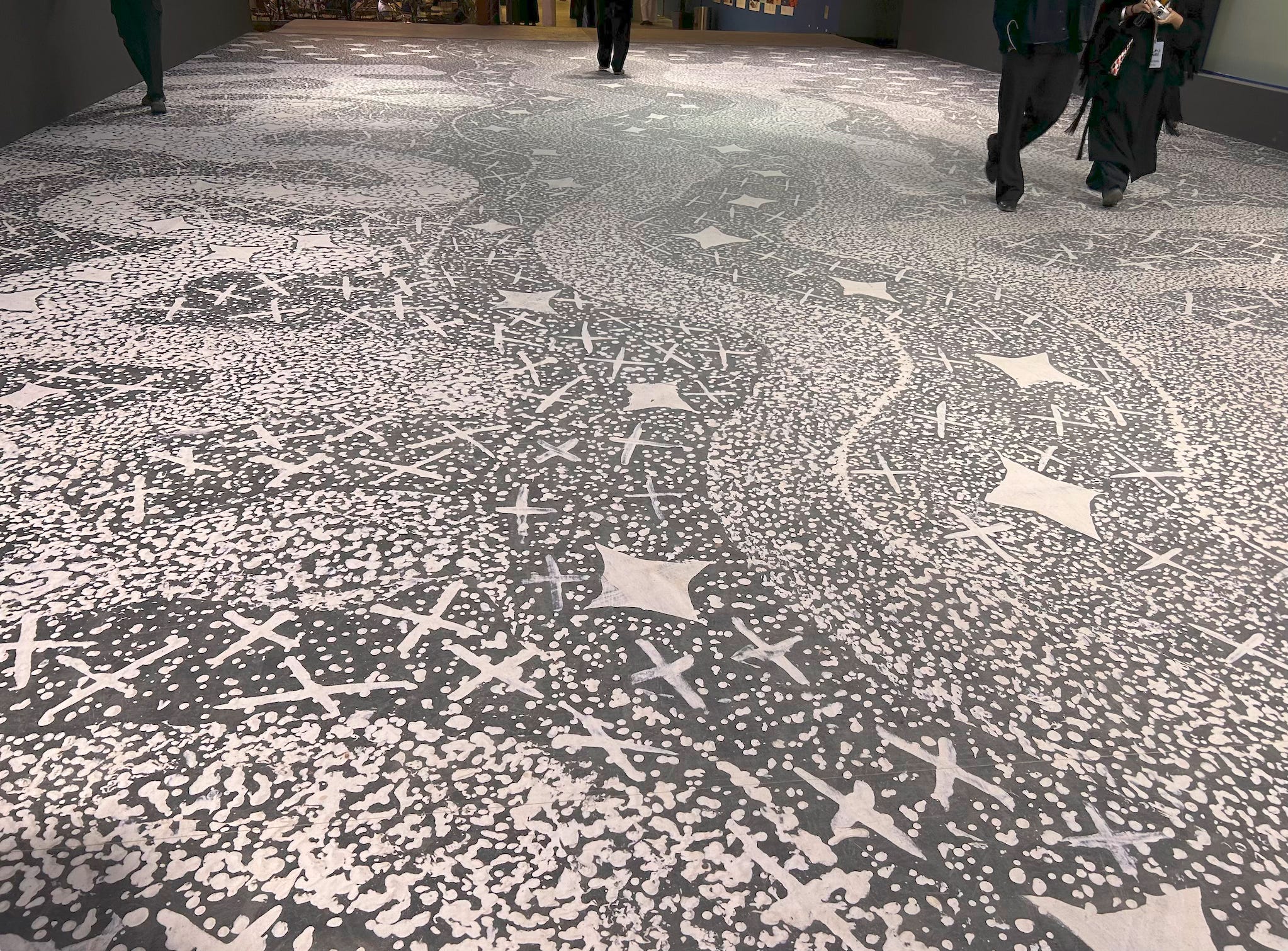
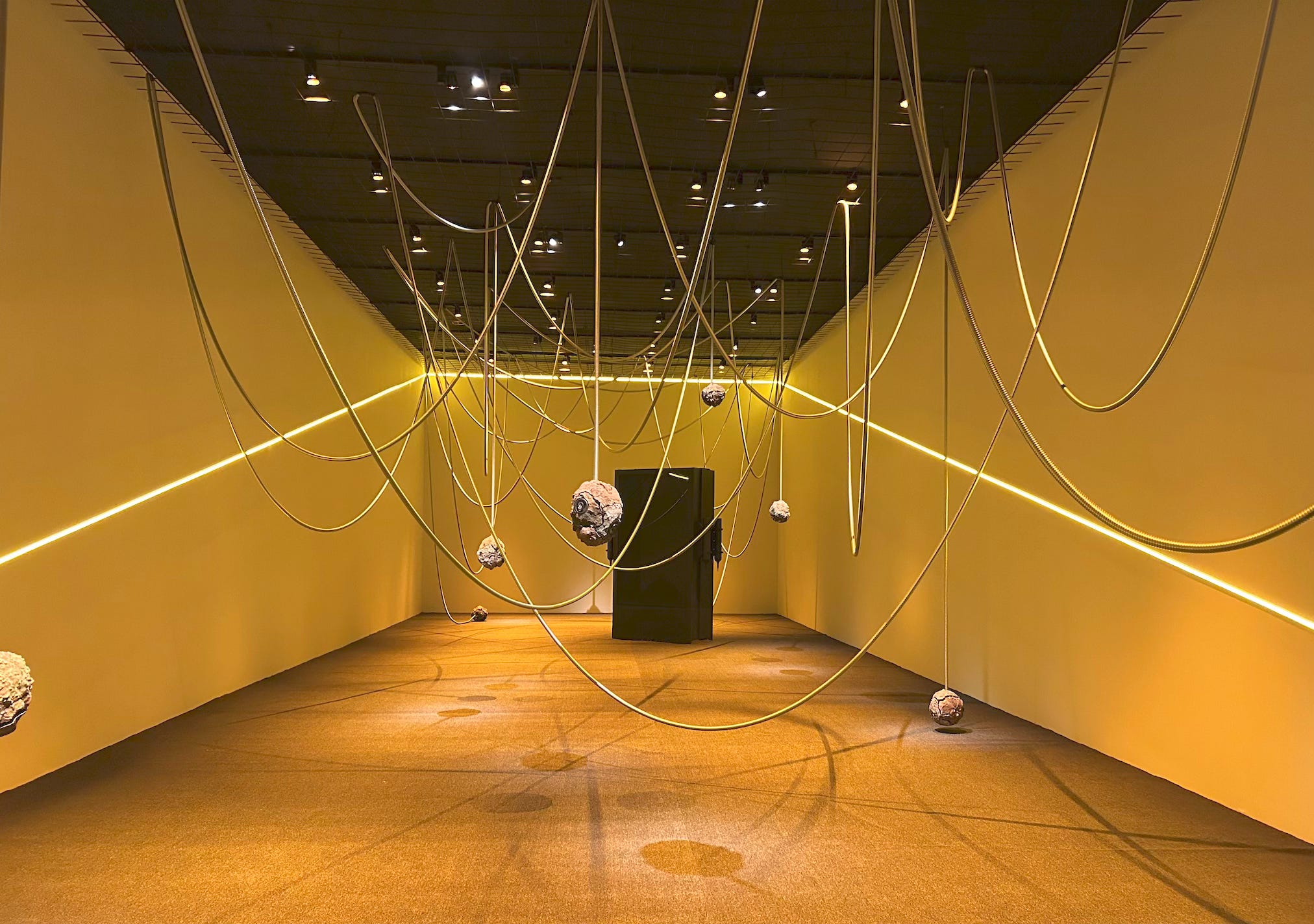
It’s an approach that often works better in theory than in practice. There were few highlights in this Biennale, with most works providing variations on wellworn themes. One show stealer was the installation, House of Eternity, by French artist, Théo Mercier. It consisted of monumental sculptures made from compacted sand, in which seemingly fossilised artefacts such as a car, ventilators and turbine wheels sat alongside ammonites and termite mounds. A meditation on the forces of time, the pieces were arranged in the manner of an archaelogical dig.
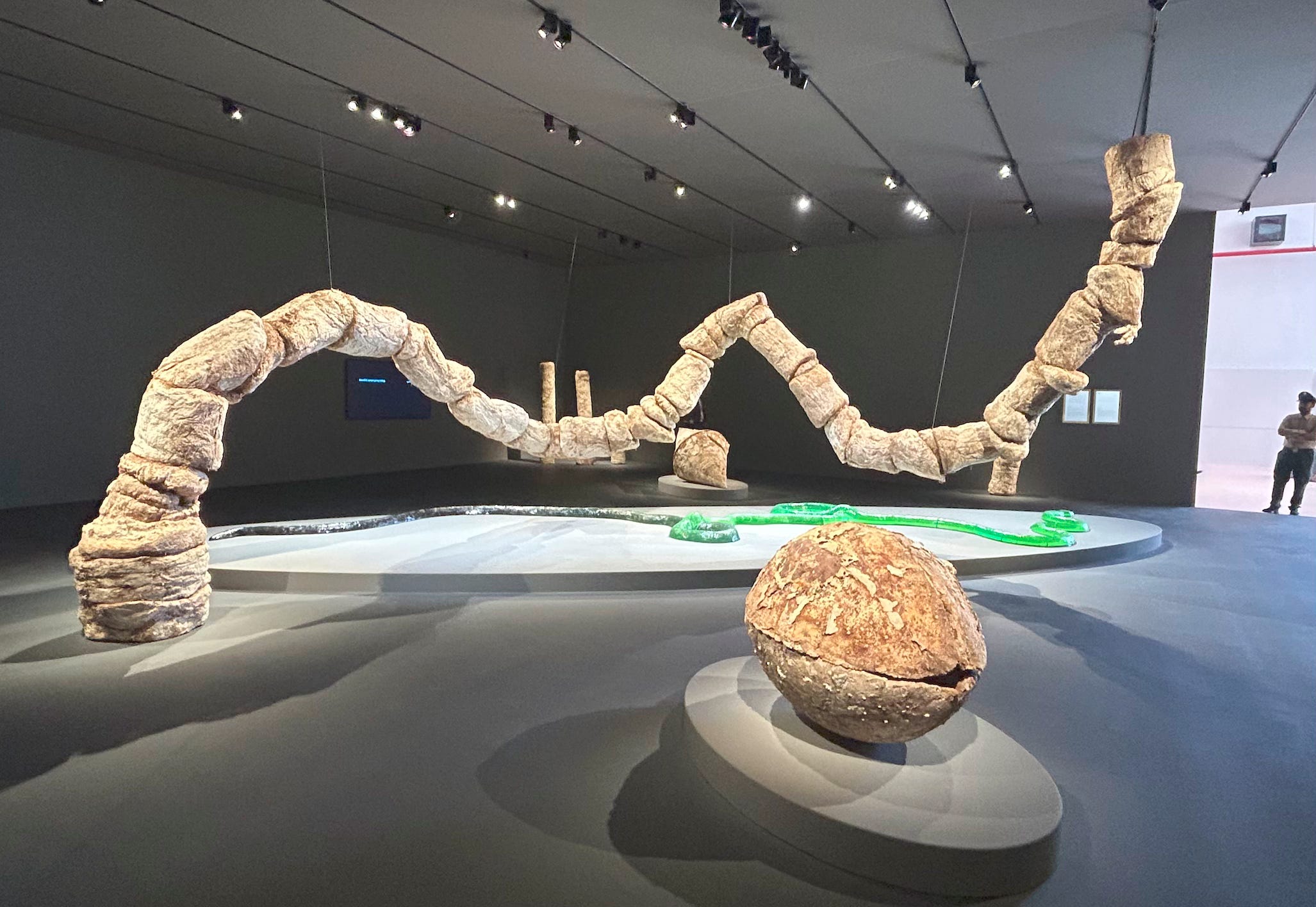
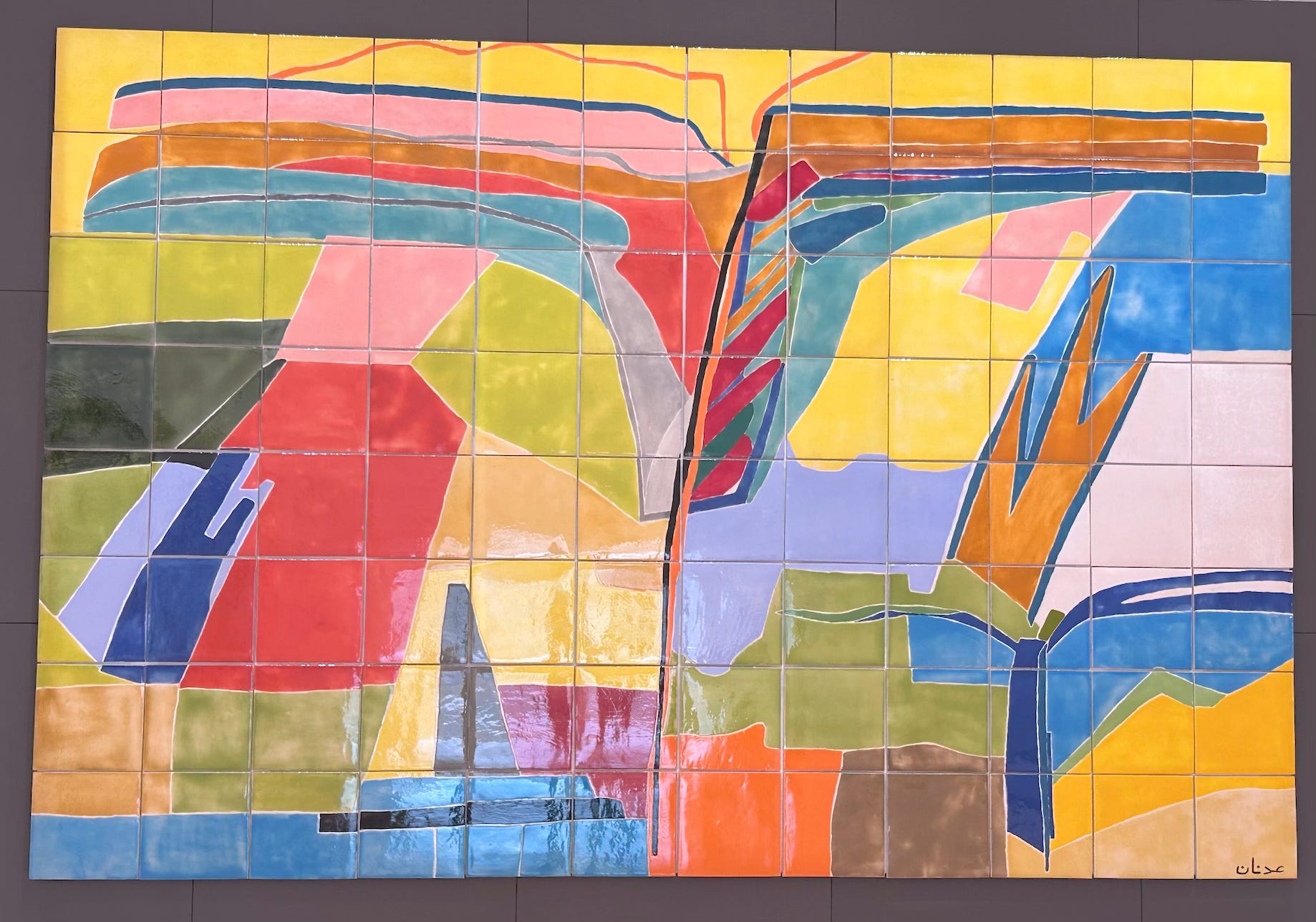
It was partly the grand scale of Mercier’s work that set it aside from many other exhibits. Among other standouts was a sound-based installation by Ecuadorian artist, Oscar Santillán, in which noises made by visitors triggered responses from the sculptures. There was a large, coloured abstraction by the renowned Lebanese artist, Etel Adnan, translated into a wall-sized ceramic mural, and a room full of giant, worm-like sculptures by Egyptian artist, Nour Mobarak, based on fungal networks, but referring to the Greek myth of Daphne who was transformed into a tree.
The Biennale was best appreciated when put in context with all the radical changes taking place in Saudi Arabia, and the eagerness with which the country is opening its doors to the rest of the world. It’s one of the rare good-news stories in the Middle East today.
Another major venue just around the corner, is the Saudi Arabian Museum of Contemporary Art, which was hosting a sprawling exhibition on the theme of marriage, titled One Night of a Lifetime. It featured almost 40 artists from the Arab world and elsewhere, exploring the rituals, ceremonies and psychology of marriage - in works ranging from large-scale installations to tiny, intimate objects. An unlikely topic for a contemporary art show, it made a space for itself somewhere between conceptualism and kitsch.
Along with the contemporary art and design galleries of the JAX district, Diriyah is also a UNESCO World Heritage Site, with a history dating back to a time before the Middle Ages. The old fort and palace have been restored, and are now major tourist attractions, surrounded by state-of-the-art facilities.
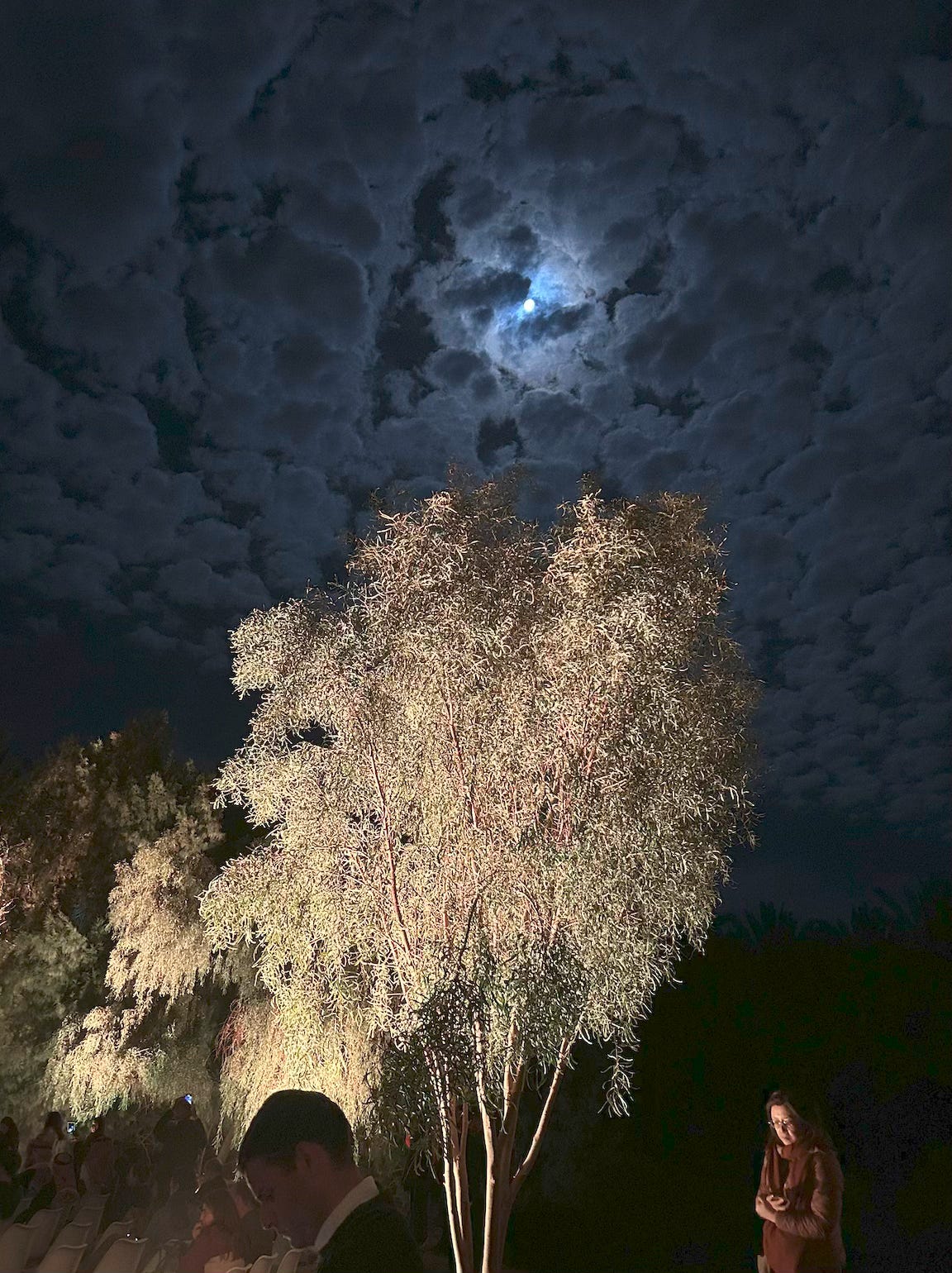
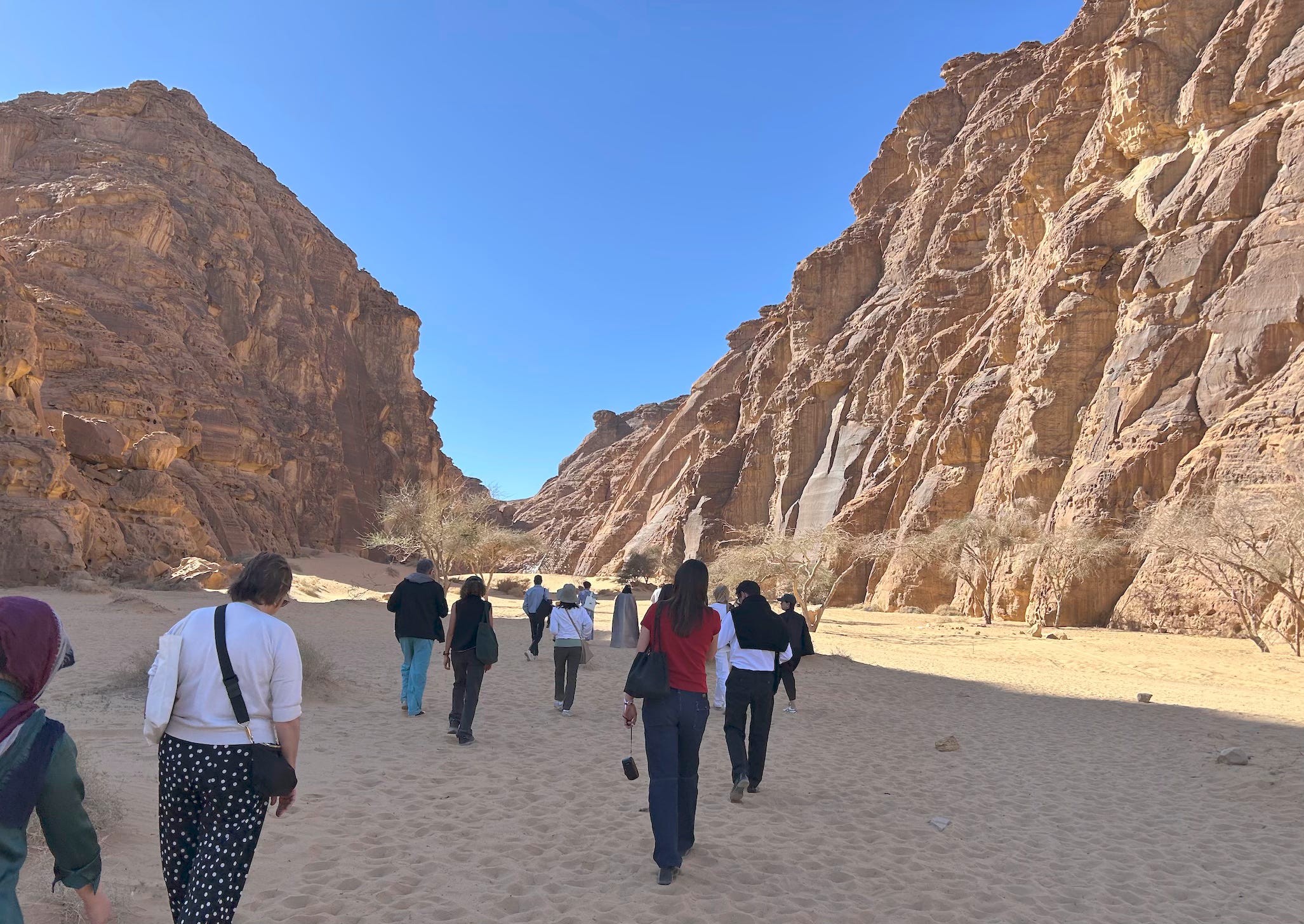
Another UNESCO site is AlUla, an oasis in the northwestern desert, in which inscriptions in stone dating back to 644 CE, are juxtaposed with postmodern architecture and a spectacular sculpture park set amidst sand dunes and towering, craggy peaks. A 90-minute flight from Riyadh takes one across a seemingly endless expanse of grey sand the Bedouins would traverse on camel. One might never be as excited as those ancient travellers must have been to arrive at a place where palm trees flourish around springs of fresh water, but it’s still a revelation.
AlUla’s popularity is growing rapidly, with the expectation that by 2030, more than a million people will have visited the site. The tricky part is how to manage this influx, preserving the fragile natural environment and heritage material from the ravages of mass tourism. In this sense the isolation of the settlement is its saving grace, allowing the Saudis to regulate the flow of visitors. Climate is another safeguard, as few would wish to arrive from June to September when temperatures are routinely in the mid-40s.
AlUla has recently opened a new art museum, called Arduna (“Our Land”), with a high-profile loan exhibition from the Centre Pompidou, Paris (Until 15 April). One could see works by artists such as Picasso, Brancusi, Klee, Kandinsky, Dubuffet and Hockney, alongside pieces by Middle Eastern artists. Upon leaving the museum there was a banquet with hundreds of people. We finished the evening sitting under a huge starry sky, eating dates and listening to music.
This is the way Saudi Arabia is seeking to repair its forbidding reputation and transform itself into a user-friendly destination. For many, the Kingdom will always be an uncomfortable proposition, but in recent years the internal changes have been spectacular, generating feelings of optimism and ambition that permeate all levels of society. The popularity of MBS is not due to the fear of a tyrant, but because of the sweeping reforms he has brought about, and the positive impact they have had on the quality of everyday life. The traditions may be feudal, but the outlook is global.
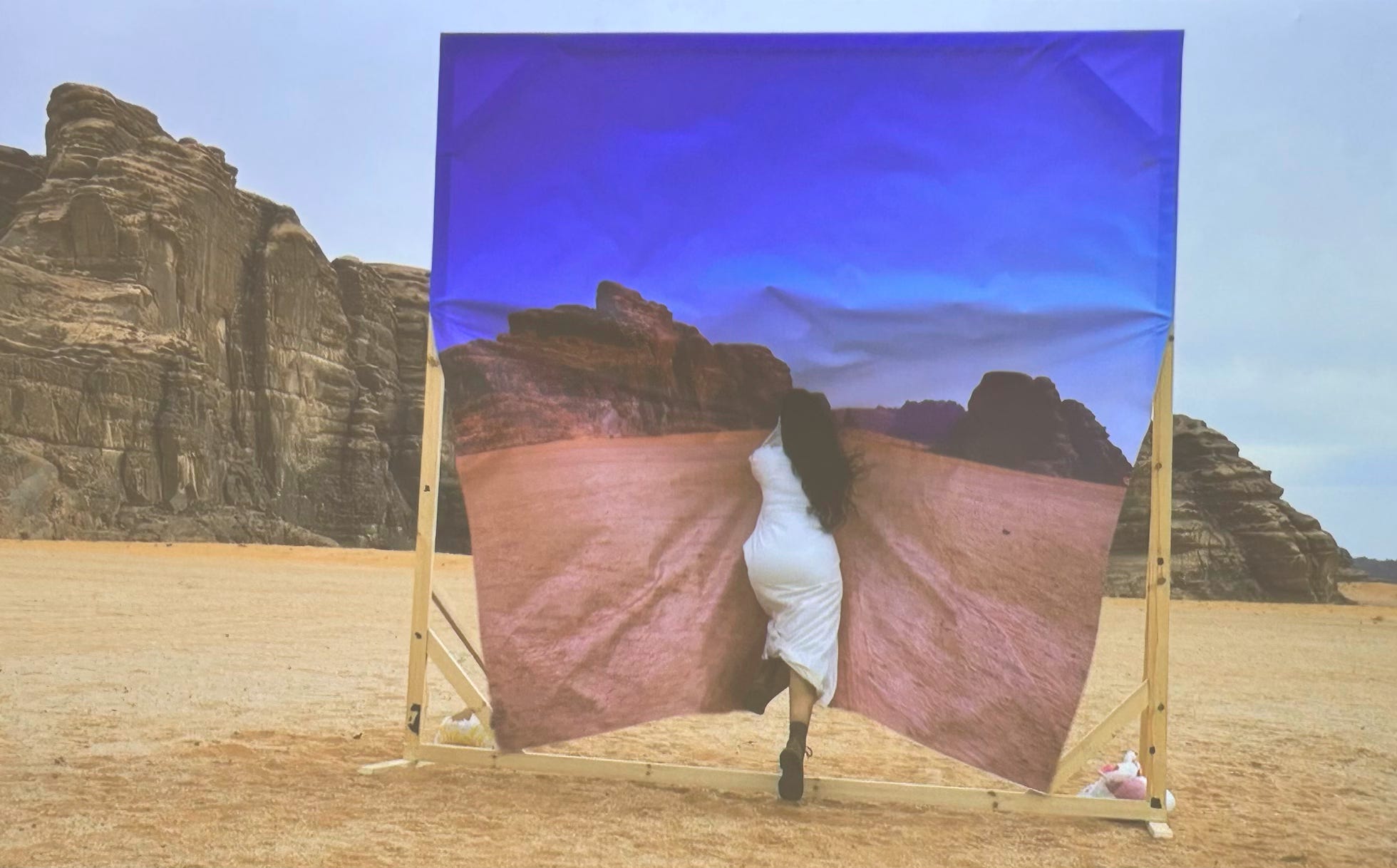
This sense of being contained within an age-old culture, while looking to a brighter future, was the implict message of one of the works in the Biennale. In The Run, a single-channel video by Saudi artist, Ahaad Alamoudi, we watch a young woman in a long white robe running across a barren landscape. After 20 minutes she smashes through a screen on which another landscape is imprinted, pushing on into the desert. What she is running towards is NEOM, the site of MBS’s proposed city of the future, a cornerstone of the 2030 Vision program. Work is already far advanced on this science fiction metropolis, but we can’t tell whether Alamoudi is racing to embrace the vision or running straight past. The artist has told interviewers she has chosen to believe the dream, but like all humanity’s grandest schemes there’s a niggling element of doubt that can never be put to rest.
Diriyah Contemporary Art Biennale: In Interludes and Transitions,
Riyadh, Saudi Arabia, 30 January - 2 May 2026
John McDonald flew to Saudi Arabia, courtesy of the Diriyah Contemporary Art Biennale
Fascinating - and revealing (depressing) how this is being overlooked in Australia. Thank you yet again, John, for opening our eyes.
Stunningly inspiring. A review that makes thinking about contemporary art enormously satisfying. Love the richness and depth of insight. Thank you John.