

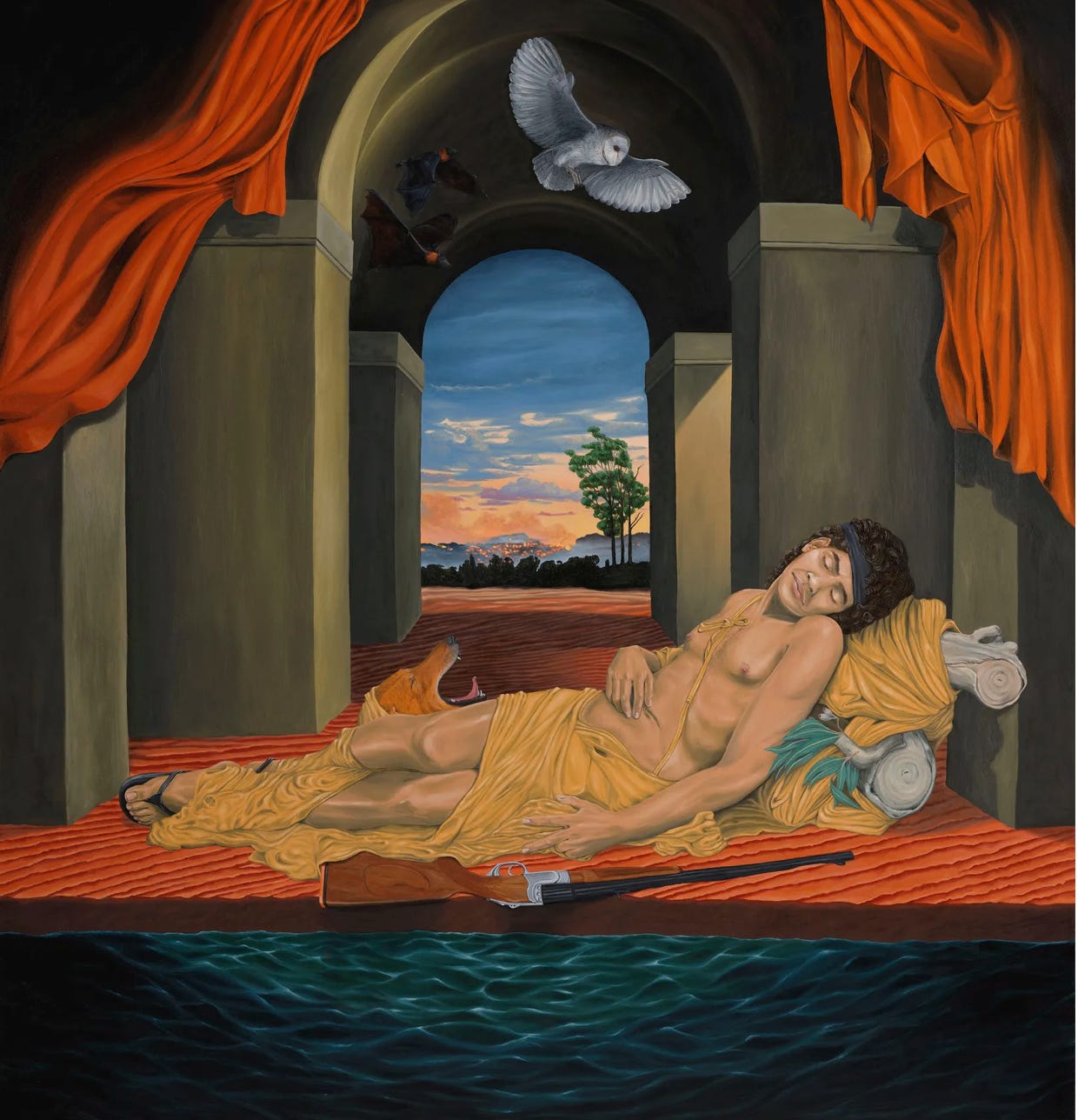
According to a headline in The Australian, the winner of this year’s Telstra National Aboriginal and Torres Strait Islander Art Awards, is a “Renaissance masterpiece”. There are only two things wrong with this statement: Ryan Presley’s Our lifestyle of tranquillity undisturbed is not from the Renaissance, and it’s not a masterpiece. Look more closely, and you’ll find it’s a “Renaissance-style” painting, with the term “masterpiece” being supplied by Shannon Brett, the curator of the 2026 NATSIAA exhibition.
The painting shows a young Indigenous man reclining in a pose reminiscent of classical figures such as the Dying Gaul. He is framed by a magnificent arch, borrowed from The Annunciation (c. 1545), by the Sienese Mannerist, Domenico Beccafumi. Presley has altered the dull colour of Beccafumi’s curtains, which are now bright red, and has changed the view through the arch to reveal the glow of a bush fire. There’s a lot of apparent symbolism, including an owl being pursued by two flying foxes, a rifle, a dingo’s head, and a bag stuffed with logs. The young man is lying on the edge of a red platform, suspended over deep blue waters.
I won’t pretend to know where all these motifs come from, or what they are supposed to mean. One might speculate that the owl is the Owl of Minerva, a symbol of western knowledge, being chased away by two bats, representing Indigenous knowledge. (Hegel: “the owl of Minerva spreads its wings only at dusk…”). That may be fanciful, but it’s in line with the general drift of the painting which is a confusing blend of western and First Nations motifs. One might see the work as an elegy for a precolonial age, but then why would the reclining figure possess a rifle? The classical arches seem far more solid and enduring than the figure, who could roll over and disappear into the water at any moment.
The bottom line is that this is a very odd NATSIAA winner, bound to stir controversy. Presley is a 39-year-old artist from Brisbane, known for witty, cerebral works such as a set of banknotes with the faces of heroic Aboriginal figures, or pinball machines that allow players to navigate different uses of the Australian landscape. I’ve never seen a larger, more elaborate painting by him and one gets the impression that he has stretched his abilities to the limit.
The writer in The Australian echoed claims that the work was “technically impressive”, but only someone with very limited experience of painting could think this was the case. I’d argue it’s a laborious attempt to paint in a manner for which the artist was not well equipped. The Beccafumi arch is an oppressive device that makes the entire painting feel leaden - red curtains notwithstanding. Renaissance artists used drapery to show off their mastery of technique, but Presley would not have wowed anyone in old Florence.
For those of us who were around in the 90s, the picture felt like a throwback to those days when dismal postmodern “appropriation” paintings were all the rage. Artists with limited skills would plunder works of the past to make points that were rarely worth making. The only difference with this canvas is that it has an Indigenous theme. As noted, the work is packed with symbols, but if there’s a message it’s garbled. Listening to the artist talk about the painting in Darwin didn’t make matters any clearer.
Some thought it good that the prize went to something “a bit different”, but the gulf between this work and those by artists from the so-called remote communities is immense. It’s the deep connection with country that distinguishes a great Aboriginal work, but Presley’s connection is political and conceptual. The work could even be viewed as a prime example of “cultural appropriation”, considered a terrible sin among First Nations ideologues. If a European artist borrowed motifs from a bark painting there’d be an outcry, but it seems to be fine for an Indigenous artist to plunder the Italian Renaissance. It’s an example of art about art, utterly foreign to those artists for whom country is their only conceivable subject.
The painting deserves its a place in the exhibition, in the name of openness and variety, but to give it the major award sends a deflating message that Aboriginal art may be anything whatsoever made by a person with Indigenous heritage. To call it a “masterpiece”, as Shannon Brett did, is mere hyperbole that doesn’t inspire confidence in the curator’s judgement.
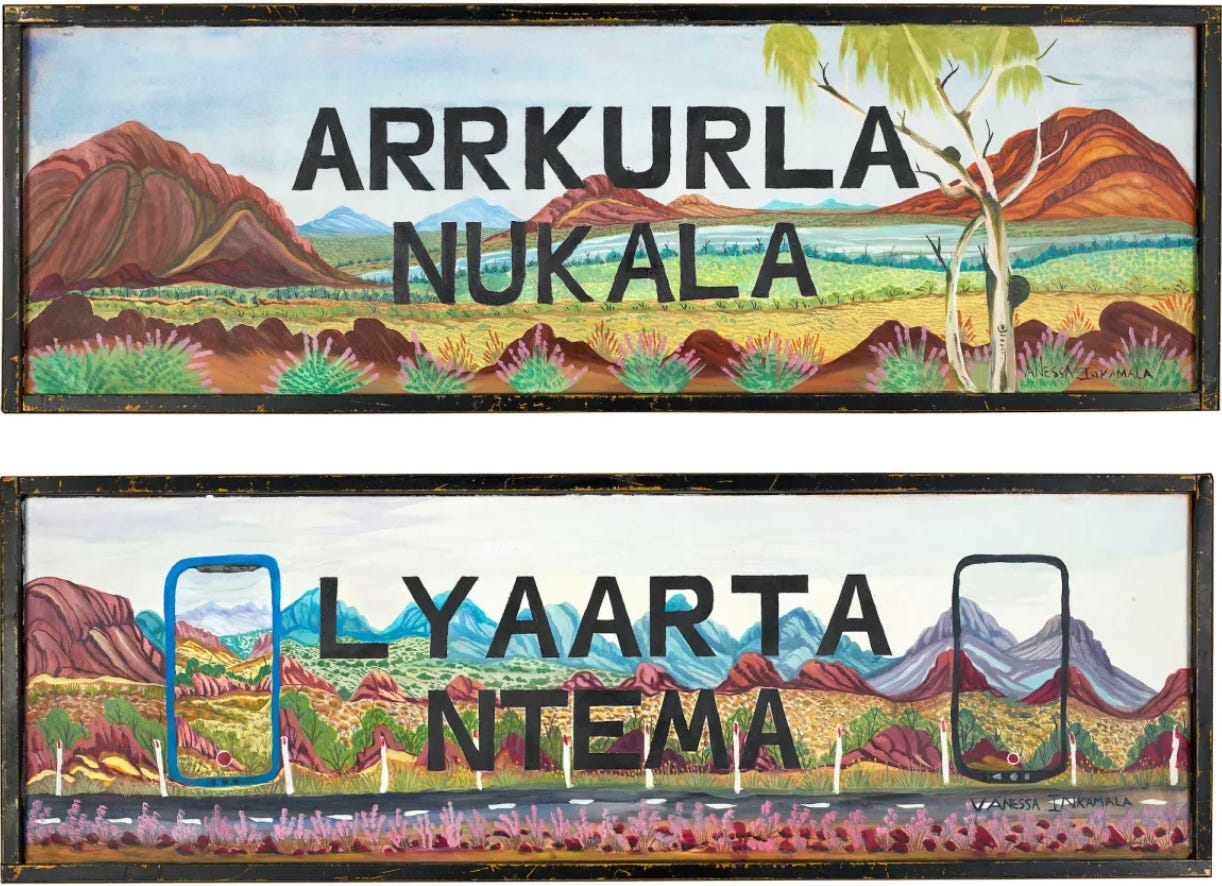
The judges, Warraba Weatherall, Yhonnie Scarce and Julie Gough, made some other odd choices this year, giving the General Painting Award to a two panelled work by Vanessa Inkamala, with words in dialect and the shapes of two mobile phones superimposed on a very ordinary bit of Hermannsburg landscape. Once again, it’s a selection that shows little appreciation of painting. Are we supposed to be amazed that the artist has done something artists such as Ian Burn were doing about 30 years ago? Even then it wasn’t great art.
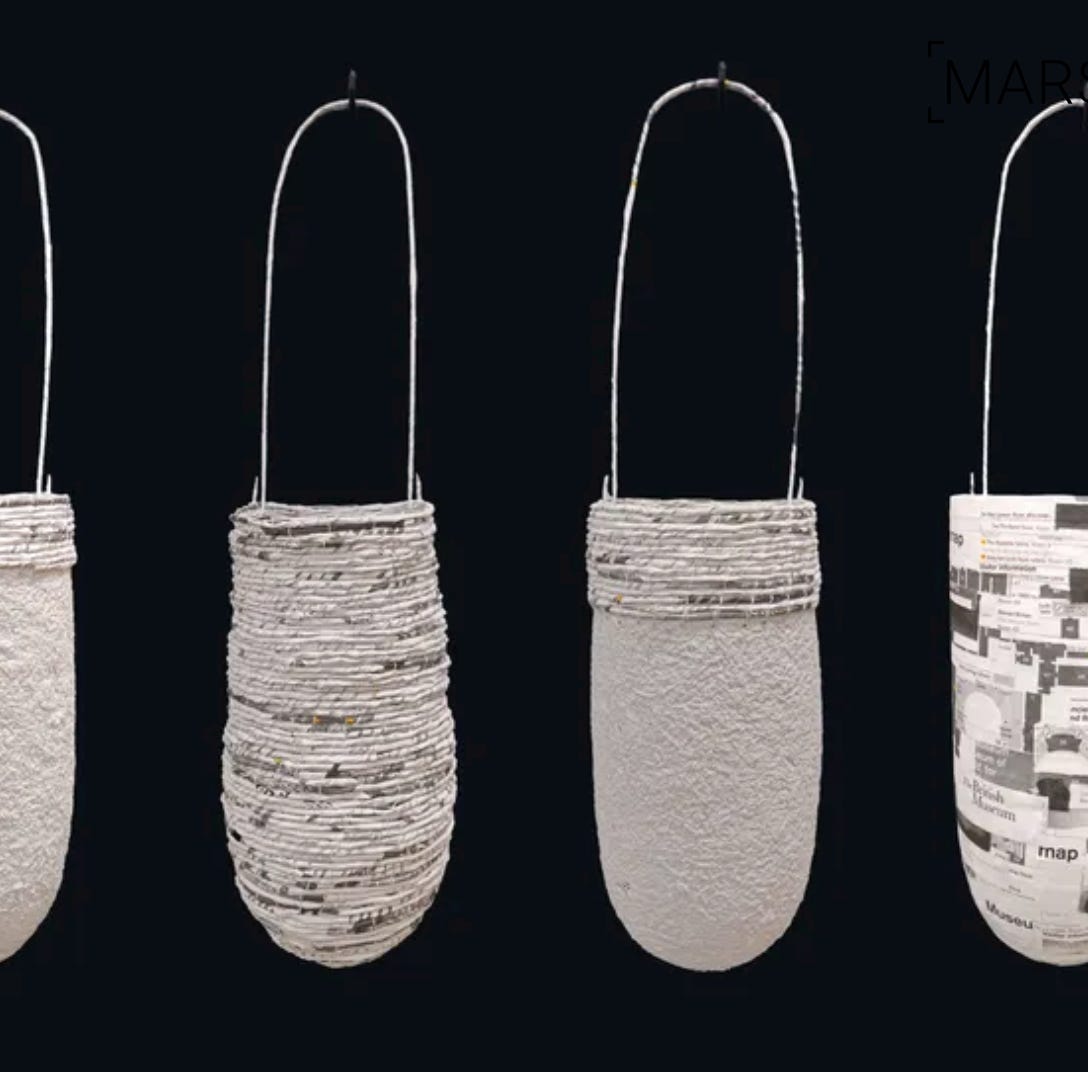
The Works on Paper Award went to Jenna Mayilema Lee, for another conceptually based work – six baskets woven from shredded paper maps taken from the British Museum. It is, at least, a coherent idea with a measure of skill involved. It’s unorthodox but innovative, approaching the subect of colonisation with a wry sense of humour.
There was nothing special about Colin Heenan-Puruntatameri’s Ngirramini Ngini Amprarruwu (the Story of the Widow), the winner of the Telstra Multimedia Award, which shows the artist performing a ceremonial dance. I’m told, however, there were very few options for this category, which has attracted some outstanding work in recent years. Juding by the cheers he received, Heenan-Puruntatameri was at least a popular winner.
The Wandjuk Marika Memorial 3D Award, Bark Painting, and Emerging Artist awards all went to artists from Yirrkala, a community that regularly dominates this competition, and remains as strong as ever. In some ways, the consistently high standard of Yolngu art almost works against the interests of the best artists. Napuwarri Marawili’s Djambatj – Deadly hunter, which took out the 3D prize, consists of two small but exquisite sculptures of reef herons. Despite the quality of the craftsmanship, one could hardly compare these pieces with a dynamic metal work by Gunybi Ganambarr, tucked away in a corner. The simple fact is that Gunybi has been so successful in the past the judges may have felt it was time to spread the love.
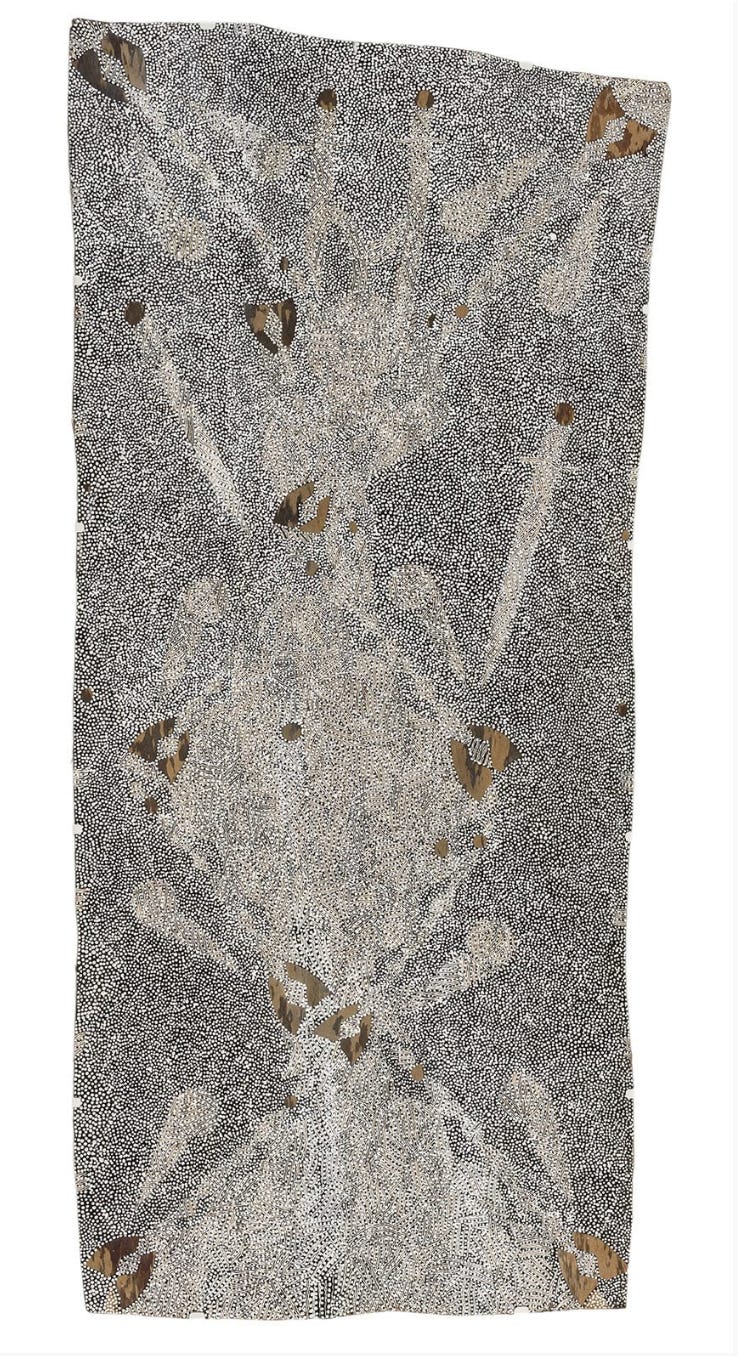
With Guruwuy Murrinyina’s larrakitj pole, exotically titled Prismatic arc, it’s a similar tale of a work that’s beautifully made, but not especially original. Guruwuy’s pole is strongly reminiscent of the work of her late mother, Malaluba Gumana. As an emerging artist she has yet to develop a distinctive ‘voice’ of her own.
It’s a different story with Barayuwa Munungurr’s The hidden reef at Yarrinya, a bark painting of mindboggling detail and dynamism, telling a story about the ancestors killing a sacred whale. Although five years younger than Guruwuy, Barayuwa is a more complete artist who has been knocking on the door of these Telstra awards for the best part of a decade. If Presley’s painting is a “masterpiece”, Barayuwa’s bark is beyond praise. It would have been a far more creditable winner of the major prize.
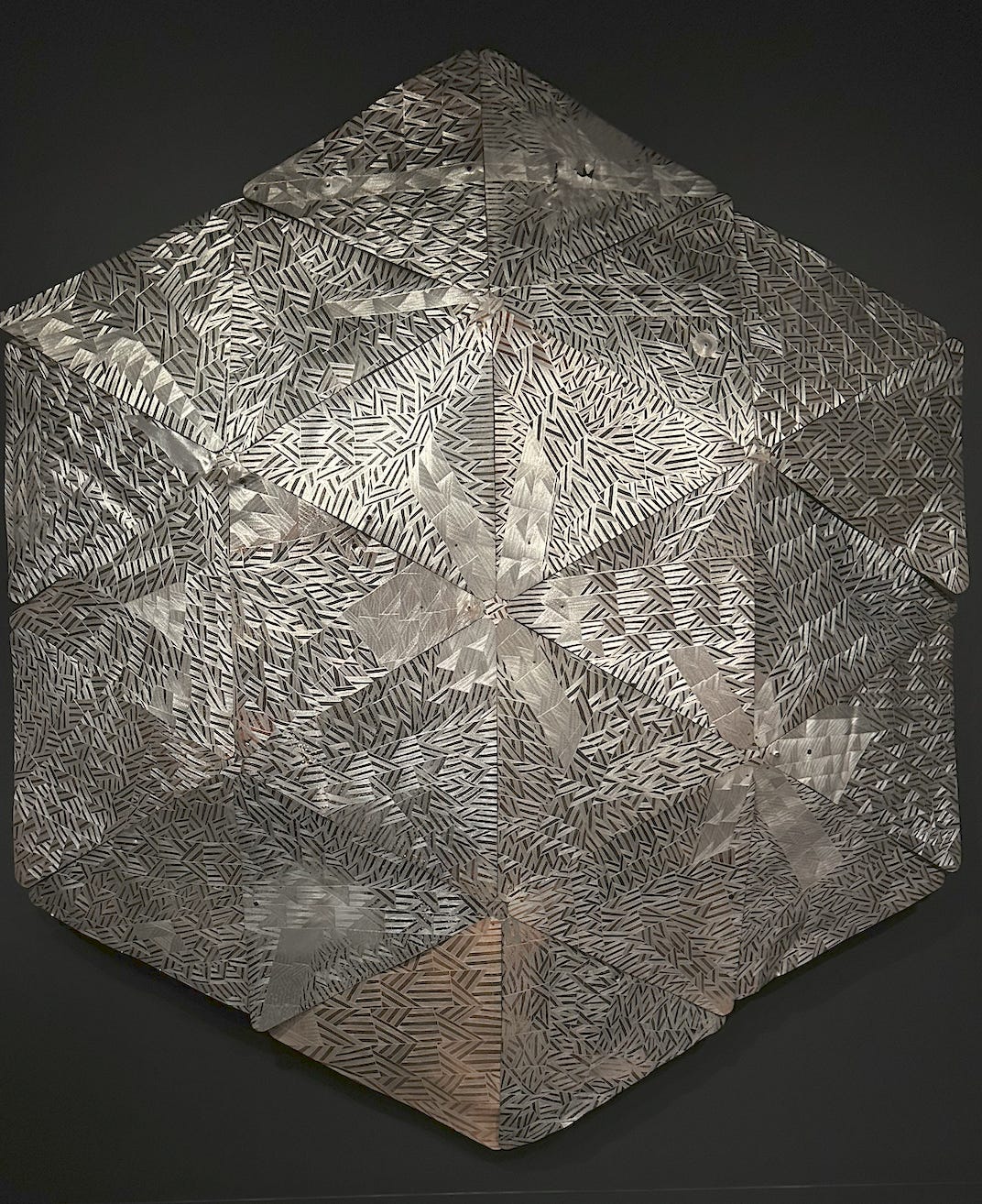
The same might be said of another piece from Yirrkala - a multipanelled metal work by Binygurr Wirrpanda called The floodplain at Garranari. I suspect the main reason this incredible work didn’t feature in the prizes was Gaypalani Wanambe’s success with a large metal panel last year. One can understand the pressure on the judges not to give successive prizes to a similar style of work, but in terms of sheer quality, Binygurr wins hands down.
Among other outstanding works by Yolngu atists, I could single out a painting by Yalmakany Marawili; a brilliant, unusual bark by Wanapati Yunupingu, made by scorching the surface and carving out a design; and striking small pieces by Ishmael Marika and Gutinarra Yunupingu.
When it comes to paintings that might have been considered for the major award or the General Painting prize, there are a number of stand-outs, including Tali Ngura (Sandhill country), a large canvas by the late Kunmanara Pompey; a fantastically detailed work by Allery Sandy, from the Pilbara; or even Silvia Wilson’s portrait of her grandmother, who has the presence of a powerful spirit figure.
One final observation was the pleasure of seeing next generation bark paintings from Maningrida by Samuel Namunjdja’s son, Kenan Namunjdja, and John Mawurndjul’s daughter, Semeria Wurrkidj. One feels the torch is in safe hands.
So much for the Telstra NATSIAA Awards, which had no shortage of highlights, despite some serious disappointments. One of those disappointments was the reappearance of artists associated with the APY Artists Collective – a group expelled from the Indigenous Art Code, which polices ethics and governance within the industry. Following a series of damaging allegations, the APYACC claims it has been exonerated of all wrongdoing. This is cannot be established so long as the results of six-month government-sponsored investigation remain concealed from public view. Please explain, Tony Burke.
When a group not recognised by the Code is included in public exhibitions, no questions asked, it makes a mockery of this protocol and insults those communities whose compliance has never been an issue. Is this so hard to figure out? MAGNT has expressed reservations about the APYACC in the past, but presumably this year’s selectors had no such qualms.
Moving on to the other exhibitions and events held during a busy week, the Darwin Aboriginal Art Fair (DAAF), is a major drawcard for visitors from around Australia and abroad. Arriving at a time when commercial art galleries are complaining of poor sales, DAAF seemed to be doing brisk business. It’s partly the fact that buyers who travel all the way to Darwin don’t want to come home empty-handed, but there’s also a sense that collectors who have been sitting tight for months as the economy remains uncertain, are starting to feel itchy again.
I didn’t arrive in time for the Country to Couture fashion show, but I try every year to get to the National Indigenous Fashion Awards, which features designers, models and community groups from around Australia competing for relatively small awards that pay a huge emotional dividend. One can’t walk away from these presentations without feeling moved by the commitment shown by the competing groups, the genuine excitement of the winners, and – not least – the amazing performance of MC, Megan Watters, who can reel off a list of a dozen sponsors, without notes. Everyone seemed delighted when the Fashion Designer of the Year award went to Delvene Cockatoo-Collins, from Stradbroke Island.
As usual, some of the most eagerly anticipated parts of the NATSIAA week are the satellite shows. There’s the annual Tiwi extravaganza at the Hilton Doubletree, which begins with a whirlwind of sales and evolves into a multicultural dance party; and a series of exhibitions organised by Matt Ward and Paul Johnstone of Outstation, the town’s most enterprising art dealers.
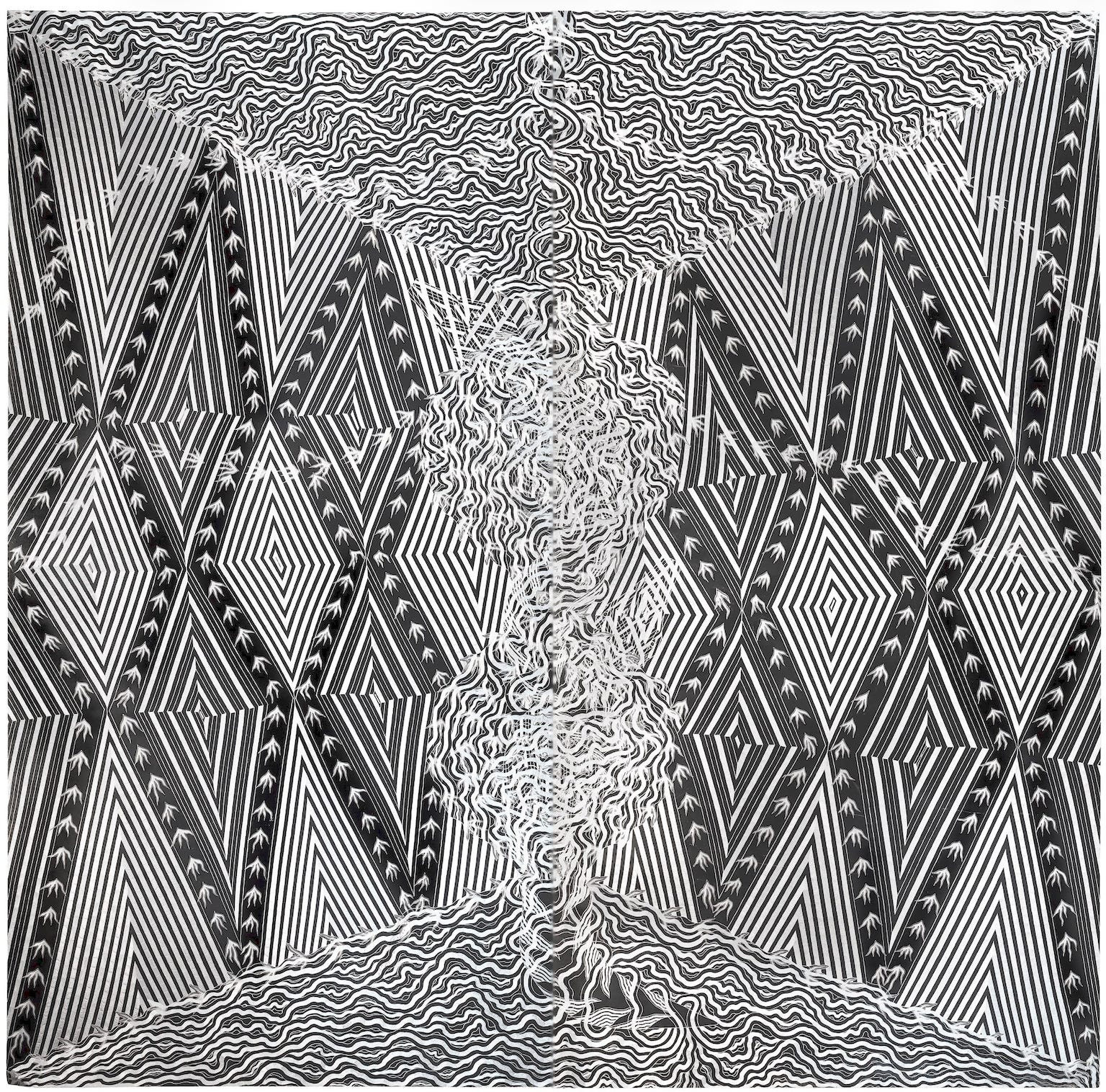
This year, Outstation hosted a show by three sons of Bakulanay Marawili (c.1944-2002), a renowned Yolngu artist. Although the display featured excellent work in several different mediums, the outdoubted stand-out was Wurrandan Marawili’s large metal panel, Yathikpa, combining the boldest and most delicate linework. It was, for me, the most powerful work of art to be seen anywhere during the week.
Not far behind was the largest bark painting I’ve ever encountered. At 276 X 151 cms, Winga by Alison Puruntatameri, dominated the Salon des Refusés, also organised by Outstation. Possibly the only reason this piece was rejected from the NATSIAAs, was that the selectors could get no sense of scale when looking at an image rather than the actual work. The surface was a tempest of abstract dots and lines made with a comb-like instrument. It testified to the growing ambition and inventiveness of Tiwi artists.
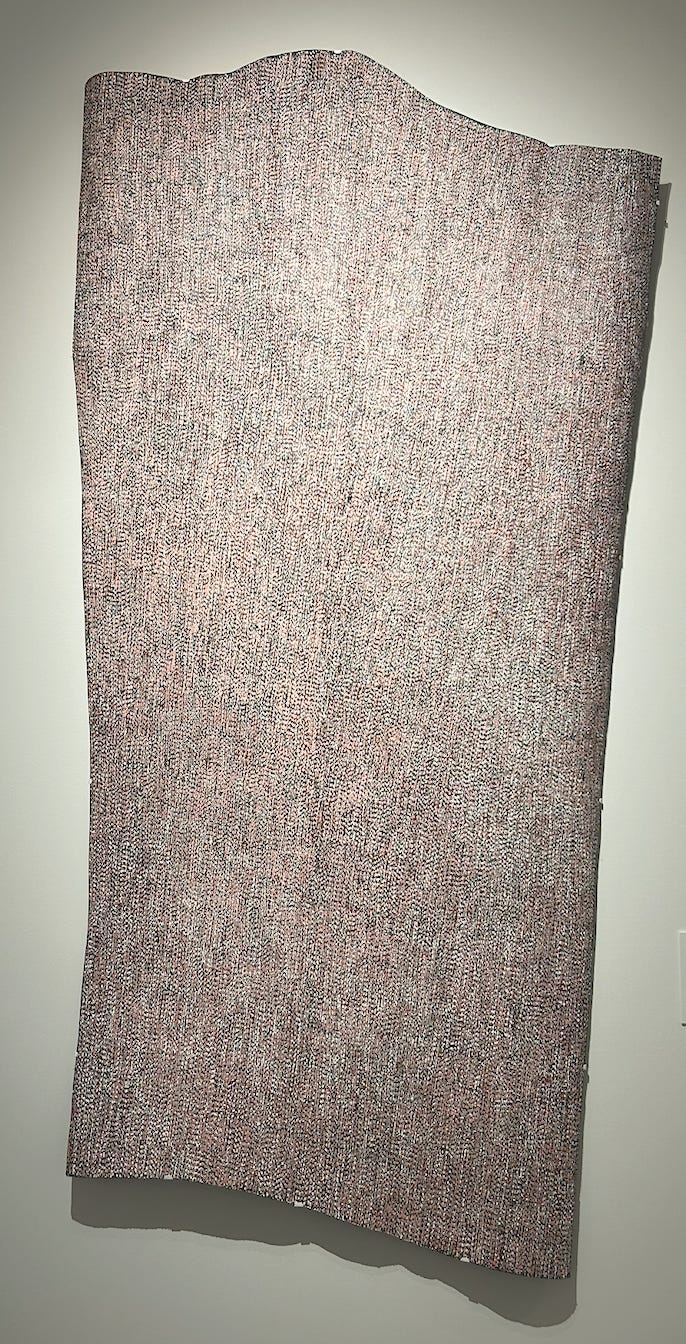
Alongside the Salon, sisters, Rene and Nancy Long Nungarrarayi showed a series of paintings called Bush Lollies, in which miniscule dots of white on black surfaces, formed clouds and clusters – a view of the cosmos that also made one think of dust or tiny seeds. The extreme delicacy and precision of these dots made them miracles of patient application.
At Qubit gallery one could see new paintings by Kaltukatjara artist, Denise Brady, that included traces of bushfires, camel tracks and other motifs that could hardly be called traditional. Just as impressive was a floortalk in which Brady discussed her imagery in a more articulate manner than I’ve heard from any other desert artist. It was an impressive performance, both on canvas and verbally.
There were plenty of other exhibitions, but the last one I’ll mention is Nyaanyi Pina Kampa, Nyanjara Karna Yaninjarni (Looking Forward, Looking Back) by another pair of sisters, Julie and Sabrina Nangala Robertson. The daughters of Dorothy Napangardi (1950s-2013), one of the greatest desert painters, the sisters have forged distinctive, individual styles. Julie won the 2023 painting award at the 2020 NATSIAA, while both artists are finalists in this year’s competition.
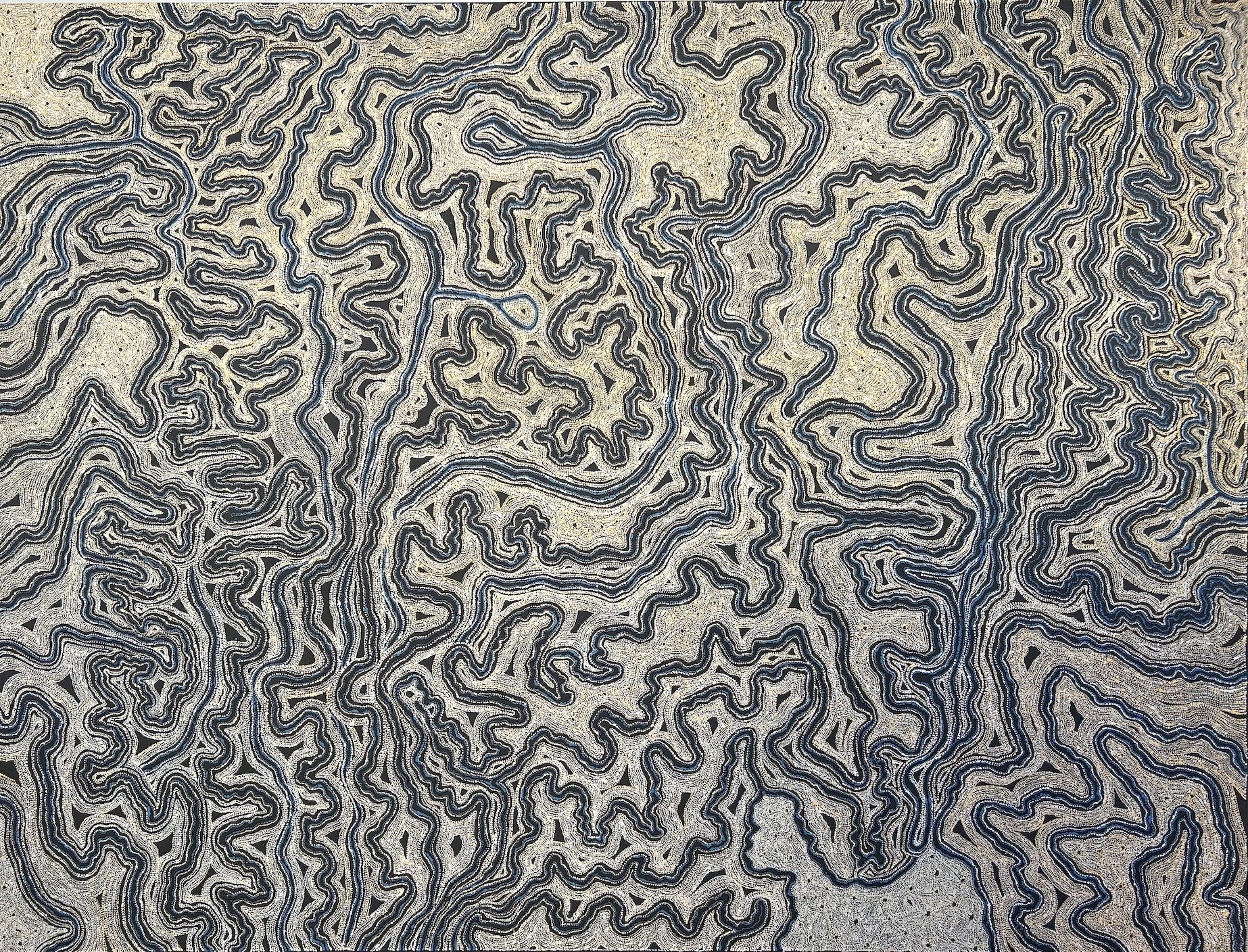
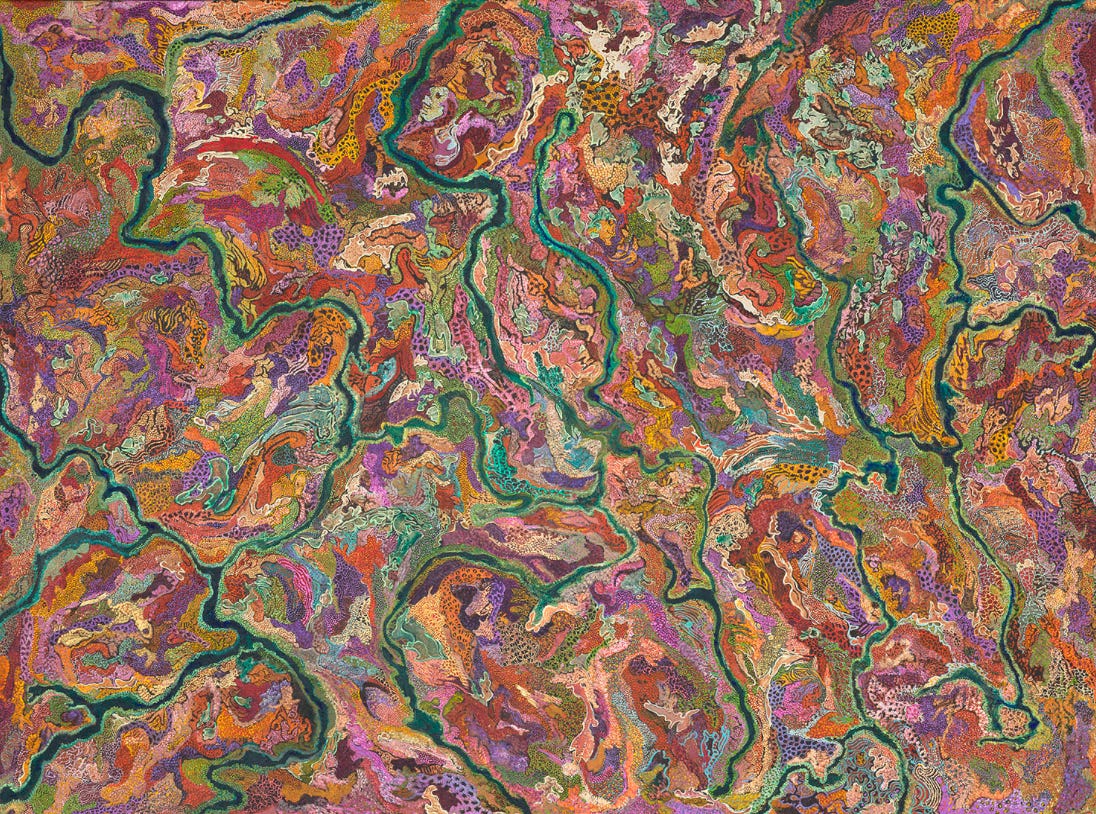
On first impressions, Julie’s more minimalist style makes the strongest impact, but gradually one learns to appreciate the complexity and variety of Sabrina’s work, which resembles a drone’s-eye view of the landscape covered in serpentine waterways, even though she is describing a hot, arid part of the country. The puzzle set by these paintings is infinitely more compelling than the heavy-handed ‘Renaissance’ imagery in Ryan Presley’s NATSIAA winner. Where the latter reveals an Indigenous artist working within an accepted visual language of global contemporary art, Sabrina’s pictures require a different type of interpretation. They may resemble abstractions or aerial landscapes, but they are authentic records of an essentially religious relationship with country – the Tjukurrpa that can’t be copied or borrowed by anyone outside her clan.
When we overlook the importance of the Tjukurrpa, we are removing the most vital distinguishing characteristic of Indigenous art. Presley’s painting is a political, intellectual exercise, while works by APYACC artists that may have been ‘juiced up’ by white assistants become no more than decorations. The argument that it’s racist to say Aboriginal artists shouldn’t be allowed to have assistants, just like white artists, is a specious one. So long as those assistants share the same Tjukurrpa, there can be no problem, but when outsiders work on a painting without being credited, any claims of a spiritual connection to country are forfeited. It’s like those misleading labels on processed foods claiming that items are nutritious when they are full of added sugar.
The awarding of this year’s NATSIAA grand prize to “something different”, is also a way of diluting our understanding of what makes for a powerful, distinctive work of Indigenous art. One can imagine any number of non-Indigenous artists painting Presley’s work, but no white artist could come up with a canvas that matches one by Sabrina Nangala Robertson or Denise Brady, or a great bark painting, such as Alison Puruntatameri’s Salon piece. When we begin loosening standards and dispensing with boundaries, we open the door to all sorts of dubious efforts claiming First Nations status. In an art scene that increasingly values work by identity rather than quality - First Nations First - that means embracing aesthetic mediocrity in the name of political virtue.
Do I sound like a purist? I feel I’m being forced into such a role by the willingness of art institutions, politicians, and funding bodies, to accept whatever is put in front of them, while turning a blind eye to the most glaring problems.
In Darwin, that includes the ongoing wrangle over the new Art Gallery of the Northern Territory, by Ashford Architects and Clare Design, which is basically completed but still unoccupied and unsecured. From the outside it’s a magnificent building – far better planned and designed than Sydney’s expensive mistake we are obliged to call Naala Badu. It’s the most desperately needed and long-awaited piece of art infrastructure in the country. For Darwin, a new art gallery, separated at last from its sibling, the Museum of the Northern Territory, can only be a massive boost to tourism and cultural life. Aboriginal art is a booming attraction for visitors to the top end, and the new gallery provides an opportunity to showcase a first-rate collection that has little opportunity of being displayed under the current arrangements in which art and artefacts compete for space with all kinds of scientific material.
For the past couple of years the Country Liberal Party government of Lia Finochiarro, has done everything in its power to sabotage a project that should have been celebrated as a great achievement. The plan for the gallery was initiated under a previous CLP government, actioned under Labor, and torpedoed by the current adminstration, which has made a great fuss about their predecessors’ wasteful spending habits. To demonstrate their own business-friendly ways, they have been trying, with zero success, to lease a purpose-built art gallery out to various commercial enterprises. It has been a foolish, wasteful exercise that has added delays and expense to a project that by now should have been launched with suitable fanfare. The CLP could have claimed all the credit but will henceforth be known for its political grandstanding and lack of vision.
Over the past year, MAGNT director, Adam Worrall, has been forced to devote an inordinate amount of time and energy trying to secure backers who will reduce any financial burden on the taxpayer. The word is that he has succeeded to a point where the government will not need to find funds for anything, yet he has not been given the green light to proceed while various inappropriate, alternative proposals are still on the table.
After all this time, all the extra work, and the complete failure of the dopey idea of putting the building out to tender, there is still the chance that the government will make a bad decision merely to save face. The gallery and the people of the Northern Territory deserve commonsense and closure with this matter. The building will be a dedicated gallery one day, no matter what happens in the short term. Putting further obstacles in the way is an act of spite, not policy.
To see the Chief Minister at the opening of the DAAF, gushing about the success of the art fair event and the government’s support, was sheer hypocrisy – and recognised as such by an audience that was sparing in its applause, although polite enough not to boo and jeer. Darwin has a great new art museum. If we are not yet able to visit it’s solely because of a group of politicians who are unwilling to recognise a major cultural and financial asset when it’s staring them in the face.
The most recent art column looks at a show by Icelandic artist, Ragnar Kjartansson, at the National Gallery of Victoria. Consisting of eight video works, one of them running for 24 hours, this may not sound like an appealing proposition – but it is! Kjartansson has mastered the art of making idiosyncratic, engaging audio-visual works that tap into parts of the psyche that rarely get activated in contemporary art exhibitions.
From Iceland we flip to Brazil, for Gabriel Mascaro’s film, The Blue Trail, set in the Amazon, in a future that looks disturbingly like the present. We are shown a country in which old people are celebrated in a brassy, insincere way, then shipped off to internment camps to live out the rest of their days. Our heroine, Tereza, has no desire to follow that plan, and forges a new path for herself. She reminded me of those incredible Aboriginal women who pick up a brush in their seventies and discover previously unsuspected talents.
The Telstra National Aboriginal and Torres Strait Islander Art Awards, Museum & Art Gallery of the Northern Territory, Darwin, until 24 January 2027