

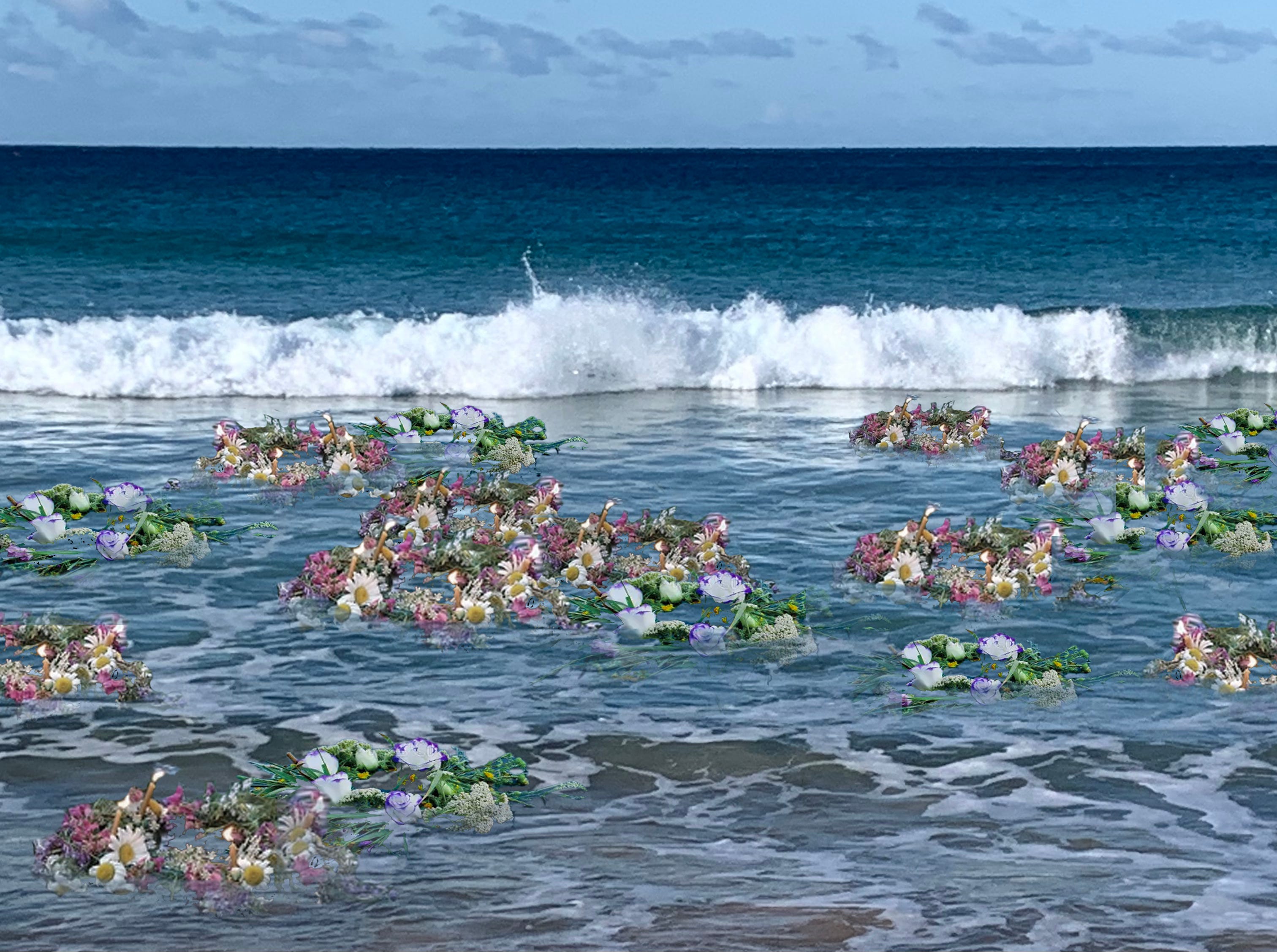
It’s impossible to ignore the events at Bondi this week, which are crowding everything else out of the news cycle. In Australia, where we pride ourselves on our easy-going, fair-minded ways, an act of terrorism feels especially shocking. We may be a successful multicultural society that shuns all forms of extremism, from both left and right, but the downside is a fog of conservativism and complacency.
Albo is copping a hammering in The Australian and other outlets, because of his government’s slowness to combat a rising tide of antisemitism. In fact, he’s only being consistent with the cautious, babysteps approach he’s taken with almost every policy, even though Labor has its highest percentage of seats since John Curtin won office in 1943. The difference is that a slowness to adopt the recommendations of reports on gambling or public sector appointments, hasn’t been thrown into the spotlight by a single catastrophic event.
Dragging the chain on Jillian Segal’s report on antisemitism now looks like a major error. Although early complaints about the report from media and politicians were vociferous, saying it would have a negative impact on freedom of speech and university funding, the most voluble critics, such as Greens Senator, Mehreen Faruqi, appear to have retreated into a discreet silence. All the controversy has slowed the process of debate, as the government has failed to come to any decisions as to which of Segal’s recommendations should be adopted or rejected. The problem is that for platforms such as Elon Musk’s X, which has devolved into a moral sewer, “freedom of speech” means the freedom to say racist, hate-filled, utterly false things, with the intention of fomenting violence. Now, in a panic, Labor is forgoing the discussions, and implementing Segal’s recommendation holus-bolus.
There’s substance to the charges of inaction even if much of the outrage has been exaggerated for political effect, with no likelihood that any response would have had the slightest impact on the terrorists. For the hapless Coalition it’s the first foothold they’ve had since the election, and Sussan Ley was quick to sound the call on Labor’s sins. Unfortunately, she wouldn’t go so far as to discuss gun control – as this might offend the party faithful and cause more defections to One Nation.
The unscrupulous Benjamin Netanyahu - the man responsible for the greatest security failure in Israel since the Yom Kippur War of 1973 – has a lot of hide to attack Albo’s failings. A world leader with any decency would be expressing his sympathy with those who have lost friends and family, rather than trying to score political points. It’s dumbfounding to be lectured by a man whose uncompromising violence in Gaza has helped stir anti-Israel feeling all over the world.
The Labor Party may feel it is being unfairly attacked but it has played a passive role in a gradual normalisation of antisemitism in the arts sector that has been underway for the past two years. It’s not that bodies such as Creative Australia, the Sydney Biennale or other major arts organisations have been marching around waving banners, it’s been a more subtle process of taking sides in the Gaza conflict – identifying those who take a pro-Palestinian stance as good, and those who support Israel, as bad. At root, it’s as dumb as that, but there are several shades of prejudice involved.
Just because we live in a multicultural democracy don’t expect neutrality. Many people seem incapable of feeling outrage at the IDF’s actions in Gaza without looking for someone to blame closer to home. Although a sizeable percentage of Jewish people are fiercely opposed to the actions of Netanyahu’s government, they are assumed to be uniformly endorsing the slaughter. It has become a term of abuse to label someone a “Zionist”, as if this were the worst thing in the world, but a Zionist is simply a person who believes the Jews have a right to a homeland. There are many shades of Zionism, from extreme right-wingers to those who argue that the Palestinians have the exact same right to a home – the famous “two state solution”. You don’t have to be Jewish to be a Zionist.
To deny any group of people a place to call ‘home’ is an acute form of brutality, but there’s a strand of opinion that believes it’s sinister for the Jews to claim such a right. In the Australian art world, this has become a weird article of faith for a lot of people who are neither Jews nor Muslims.
I’ve occasionally wished the Jewish Film Festival was a little less obsessed with the Holocaust, but the past year has shown why it’s important to keep issuing reminders. Many young people who have casually embraced antisemitism in their fury over Gaza, have completely forgotten about the tragedies of the Second World War. Such a failure of historical awareness is rapidly becoming one of the most alarming traits of our age. A 2018 survey in Russia found that more than half of those aged between 18-24 had no knowledge of Stalin’s crimes. I imagine the same holds true for China, where discussion of Mao’s horrors is discouraged.
Atrocities that have defined the identities of modern nations have made little impression on many who have embraced the Palestinian cause so indiscriminately. Simplistic ideas about “colonialism” are being used to equate Israel with the British colonisation of Australia. Crude analogies are being made between the Palestinians and Aboriginal people, setting off emotional triggers in those who are quick to engage their feelings rather than their brains, ready to convert history into tabloid tales of heroes and villains.
The first and most obvious sign of the drift towards political insensitivity was the inappropriate choice of Khaled Sabsabi to represent Australia in next year’s Venice Biennale. I’ve been through this issue many times and am not going to rake over it again. Suffice to say, this is not the time Australia should be sending either a Palestinian partisan or a hard-line defender of Israel to Venice.
In the wake of the Bondi attack, accusations are flying that the Australian government has shown undue partisanship by recognising a Palestinian state. Although the obvious spur for this action was the unrelenting, inhumane nature of the IDF campaign in Gaza, when we gratuitously identify ourselves with one side of the conflict, at one of the world’s major cultural events, it adds fuel to accusations of bias.
Creative Australia’s lack of political awareness and the woeful failure of its selection processes have been exposed by The Australian, which pointed out the close connections between those who dispose of CA grants and those who receive them. But these articles were completely ignored by other outlets that preferred to believe in the inherent innocence of all concerned. An “independent” investigation into the Sabsabi affair found there were vague procedural problems with CA, but nobody was to blame. It’s getting to the stage that every time I hear the words “independent investigation”, I automatically think “cover up”.
The failure of these processes is a topic widely discussed by artists who feel they have no chance of getting a grant if they are not part of an inner circle or at the very least a favoured demographic. In a recent article we find the former head of Opera Australia, Lyndon Terracini, now working in Verona, calling for a two-year freeze on CA funding while its “broken fundamental mechanism” undergoes a thorough review.
This followed revelations that CA had run up a $636,126 bill for international travel over the past two years. Personally, I don’t think this is as big a scandal as the process of calling for people to apply to be members of CA committees. It should be obvious that those most eager to sit on committees have an agenda for themselves or their associates. A quick glance at where the grant money has gone for the past couple of years bears out this suspicion. Neither is it clear how candidates are selected for these roles, or who does the selecting. What qualifications are required apart from being approved by CA officers who may share the same political predilections? For grant applicants, the process of “peer assessment” often means being judged by a group of like-minded friends or ideological enemies.
None of this is evidence of antisemitism but even allowing for the fact that Australia is home to a million Muslims and only 117,000 Jews, the amount of money handed to Sabsabi and his colleagues suggests a completely lopsided set of priorities.
Looking elsewhere, let’s not forget Abdul-Rahman Abdulla’s brief stint on the Council of the NGA, cut short by a series of militant social media posts. When the appointment took place on September 2023, one month before the October 7 massacre, Arts Minister, Tony Burke, welcomed the new member saying he would provide “authentic leadership” which reflected “modern Australia”. When Abdullah was quietly retired from the Council a month later, neither Burke, nor NGA director, Nick Mitzevich, would say a word. So much for “authentic leadership”. This was one moment when a decisive statement by the Minister would have demonstrated a commitment to separate our arts institutions from the divisive realm of politics.
Then there was the protest in the front of the National Gallery of Victoria at the beginning of August, calling for the museum to sever ties with major sponsor, John Gandel, who was condemned for his Zionist views. In this instance, the antisemitism was out in the open and inexcusable. When I wrote a piece condemning the protest, I received hate mail from those heroic types who love to breath fire on political issues while remaining anonymous.
The Biennale of Sydney has also come under scrutiny for choosing Sheikha Hoor Al Qasimi as its next artistic director. As another outspoken supporter of the Palestinian cause, Al Qasimi’s appointment allegedly brought about the withdrawal of some of the exhibition’s Jewish sponsors. The shortfall has been made up by Al Qasimi’s connections in Sharjah, while concerted efforts have been made to portray the director as being chiefly focussed on the art, not the politics.
Many people, myself included, have been hesitant to judge Al Qasimi’s Biennale until we’ve seen the show, but last week brought a news item that didn’t inspire much confidence. Yoni Bashan writes how publisher, Morry Schwartz, until recently a Board member of the Biennale, was shocked to find the official “ArtSeen Ambassador”, performance artist, Bhenji Ra, posting a picture on Instagram of a rabbi draped in blood-stained Israeli and American flags, with his foot on a baby doll.
Schwartz emailed the Biennale’s chairman, Kate Mills, and vice-chair Matt Crocker on August 10. Bashan writes: “He attaches the photo and asks how it’s even possible that this person is still an ambassador for the Biennale. He compares the image to ‘the worst Nazi caricatures of baby-eating Jews’ and says ‘there is no walking this sickness back’.”
Two days later, Schwartz is told the ambassador has been reprimanded and promises not to do it again. But, like the Smiths’ sweet and tender hooligan, it was a case of ‘not until the next time’. It took a fortnight for Ra to start posting pro-Hamas images from a Gaza solidarity rally. This time when Schwartz wrote in protest there was no reply.
One week after this article appeared we have the Bondi shootings, which makes Bhenji Ra’s postings look utterly reprehensible. How can someone call themselves an “ambassador” for the Biennale while sending out these inflammatory posts? What is an “ambassador” anyway, and why do we need one? It sounds horribly close to Lisa Havilah’s “Powerhouse Associates” program, which has put more than $2.5 million into the pockets of a handful of favoured individuals.
According to the Biennale, the ArtSeen program is “each year shaped by a prominent local artist who curates a bespoke program of events designed to platform and uplift their community.”
Ra’s program promises “extra surprises along the way!” She’s certainly delivered in that respect, although it’s an interesting question as to whose community is “uplifted” by antisemitic hate posts. As her Instagram account appears to be private, this doesn’t argue any great community outreach. It’s interesting to note that Number One on her list of followers is the Powerhouse Museum, confirming the connections that exist between organisations and individuals that seem to enjoy special privileges in NSW.
What all these stories add up to, is an unpleasant sense that the (understandable) outrage generated by the IDF assault on Gaza is being channelled into a generalised hatred for Jewish people. The gradual build-up of such feelings has consequences, leading to the dehumanisation of those stigmatised as the enemy. The attack in Bondi may have no direct connection to artworld bigots, but it should serve as a wake-up call that demonising an entire community is not a parlour game. As a medium of communication that informs the greater culture the visual arts play a role in the way we relate to the world around us. When artists who make one-sided political statements are ‘grant approved’ it implies official acceptance and approval.
The Betoota Advocate got it right in its response to the Bondi incident and “Australia’s unorganised, point-scoring, online activists”. The self-sustaining momentum of those who like to associate themselves with “issues” on social media has been halted by the extraordinary empathy the public has shown for the victims. The killings have put a human face to an abstraction, reminding us that figures such as 87-year-old Holocaust survivor, Alexander Kleytman or 10-year-old Matilda, were ordinary, good-hearted people who could not be equated with the ideologically motivated hatred so casually embraced by the Australian artworld.
Perhaps the greatest saving grace over the events in Bondi is that Ahmed Al Ahmed, the bystander who tackled the gunman, was himself a Muslim. In this battle between two western suburbs shopkeepers we can see that the actions of the terrorists should not be associated with the Muslim community any more than the carnage in Gaza should be laid at the door of Australia’s Jewish community.
The overwhelming public outcry and sense of solidarity with the victims has apparently shamed into silence those who like to identify themselves with hot button political issues - although it remains to be seen whether this is actual shame or merely a strategic withdrawal. Will the Biennale’s ArtSeen ambassador, Bhenji Ra, be posting her sympathies for the victims of terror?
The art crowd loves to strike heroic poses, think of itself as inherently subversive and politically radical, but with the Gaza conflict, this dilettantish posing has been subsumed by a mob mentality. We need to be able to feel compassion for the Palestinians without letting these sympathies curdle into hatred for another group of people who should not be expected to answer for Netanyahu’s barbarism. Politics, like religion, is infinitely darker and more dangerous than the self-styled rebels of the artworld like to imagine and needs to be handled with care. Instead of plunging in wildly with feelings inflamed by anger, we need to pause and think.
At the beginning of what has turned out to be a sombre week I was immersed in the world of fashion, writing an art column about the National Gallery of Victoria’s summer blockbuster, Westwood/Kawakubo, and a review of Sadie Frost’s documentary on Twiggy, the first super model. Both exhibition and film are highly recommendable, although it requires a wrench of the psyche to step away from the nightmare at Bondi and accept that fashion has its own vitality and validity. Life goes on, despite the attempts of murderous fanatics to make us angry and fearful. There’s nothing praiseworthy about the great Australian complacency, but it’s a far better option than national paranoia.
Extremely astute and wisely thought out article John.
You have covered the sad situation of people rushing to judge innocent people who have nothing to do with the results caused by maniacal leaders on both sides .
Well said, John.