

Ideally, I should have written about the 5th National Indigenous Art Triennial months ago, but somehow the show kept slipping back in the queue. Whenever that happens there’s usually an underlying reason. After reading the catalogue I think I understand my hesitations.
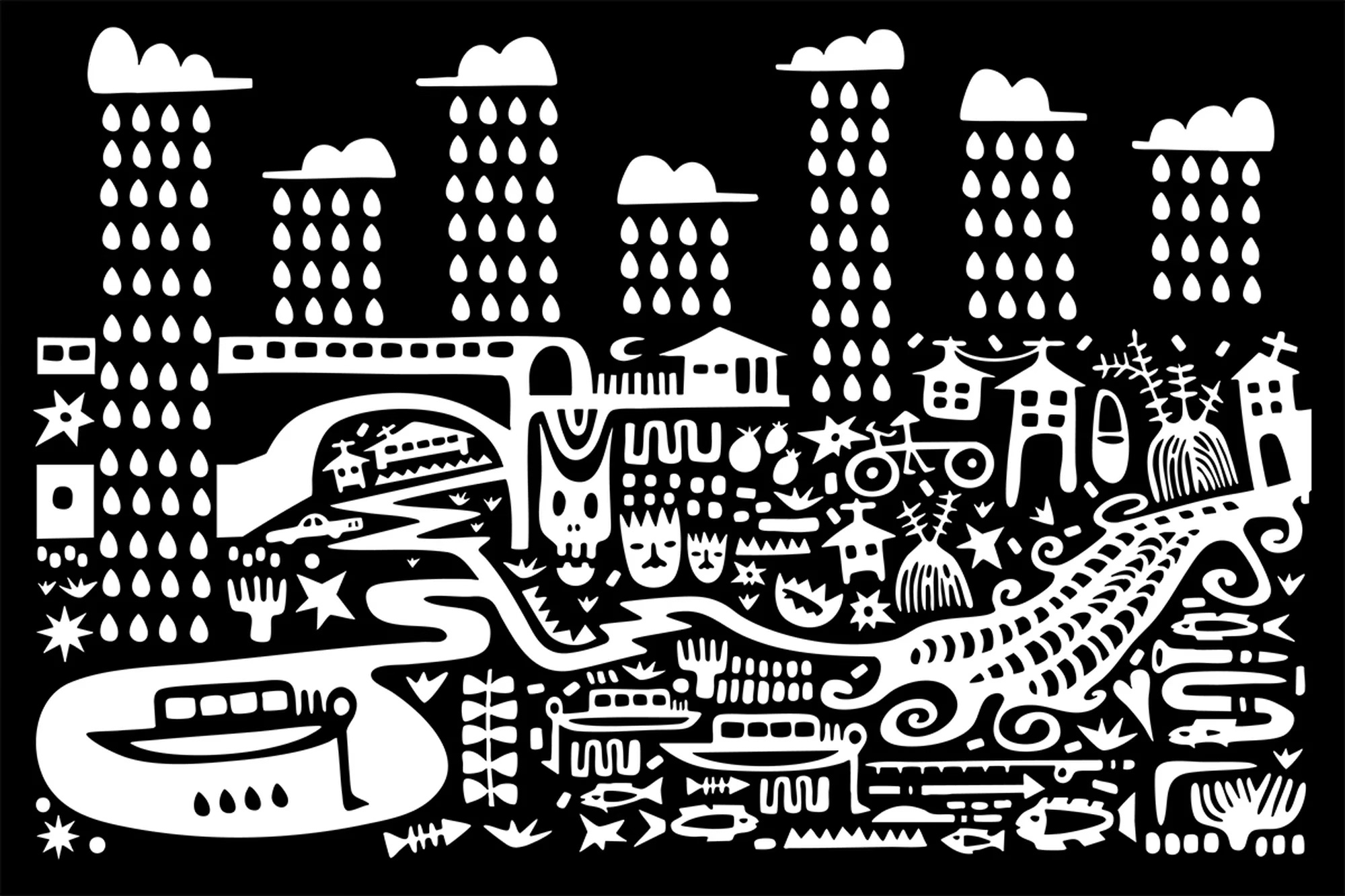
The subtitle of this Triennial is After the Rain, which projects a message of new life and vitality. One thinks immediately of the parched earth of the Outback, where a shower of rain brings forth a sudden explosion of blossoms and wildflowers. I’ve seen this myself, and it’s a sight that raises everyone’s spirits.
This is the way guest curator and artist, Tony Albert, wants us to respond to the work he has selected. It’s a celebration of Indigenous creativity and resilience that encompasses artists young and old, from the Bush and the city. He shows us Aboriginal people as one big happy family, ready to embrace “Queer” identities, and urban ‘Blaks’ like himself, who turn up on country to sample life in the remote communities.
In this respect, Albert has been diligent. The catalogue, a remarkable piece of design by Aretha Brown, includes numerous photos of the curator visiting artists all over Australia. It also includes unctuous letters of invitation he sent in specially decorated envelopes, and extracts from a working journal filled with drawings, paintings, inscriptions and photos. The journal is a work of art, and the same might be said about the exhibition.
I’ve never seen a catalogue with so many photos of the curator, or such a personalised approach to the choice of artists. It’s not mere narcissism or self-promotion, it’s a deliberate strategy to create the impression this is not just another exhibition but a spiritual communion between artists united in their shared Indigenous identity, with Albert as the presiding guru.